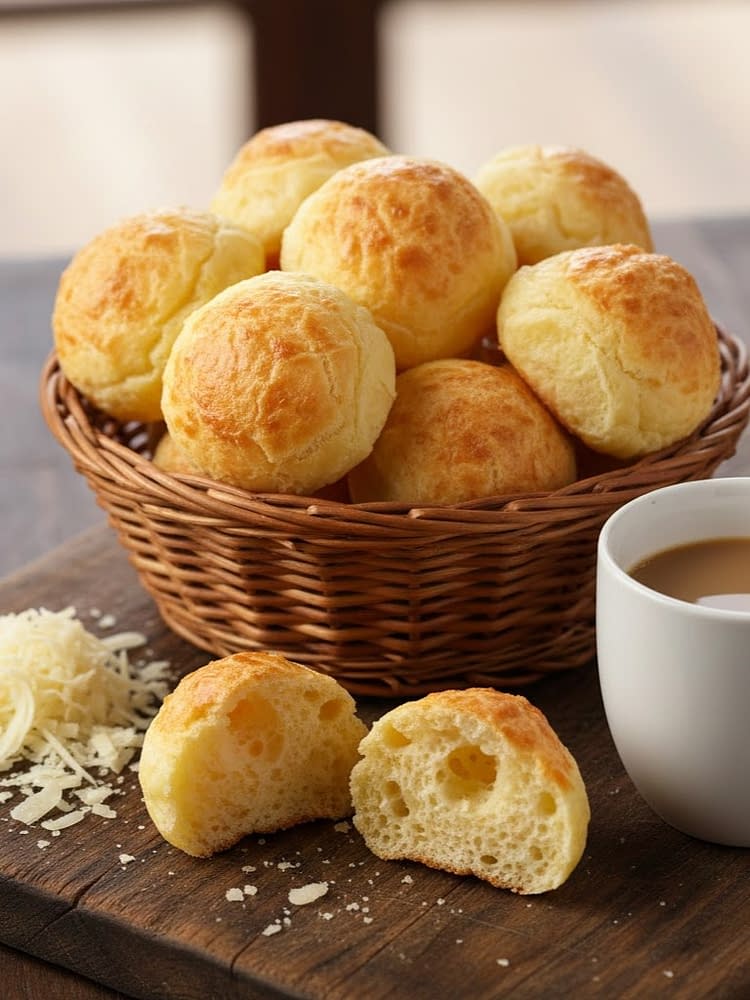

Pão de Queijo is more than just a simple bread; it’s a cultural icon, a staple at breakfast tables, a popular snack any time of day, and a symbol of Brazilian hospitality. Its unique texture – crispy on the outside, incredibly chewy and stretchy on the inside, and bursting with cheesy flavor – sets it apart from any other bread you’ll ever encounter. It’s naturally gluten-free, making it a fantastic option for those with dietary restrictions or anyone looking for a lighter, yet utterly satisfying, bread alternative.
I’ve had the honor of perfecting this recipe over many years, experiencing firsthand the joy it brings. In this comprehensive guide, I will walk you through every nuance of creating Authentic Brazilian Cheese Bread from scratch. We’ll cover the essential ingredients, demystify the preparation steps, share expert tips for guaranteed success, explore exciting variations, and even discuss the fascinating history behind this beloved treat. So, tie on your apron, gather your ingredients, and let’s embark on this delicious journey together!
The Heart of Pão de Queijo: Understanding the Key Ingredients
At the core of Authentic Brazilian Cheese Bread lies a simplicity that belies its incredible flavor and texture. Unlike traditional bread, there’s no yeast, no kneading, and no gluten involved. The magic happens with just a few key components.
Polvilho Azedo: The Star Starch
The most crucial ingredient, and often the biggest point of confusion, is tapioca starch, specifically “polvilho azedo” (sour tapioca starch) or “polvilho doce” (sweet tapioca starch). For Authentic Brazilian Cheese Bread, “polvilho azedo” is the undisputed champion.
What is Polvilho Azedo?
Polvilho azedo is a fermented tapioca starch, derived from the cassava root. The fermentation process gives it a slightly sour flavor (hence “azedo,” meaning sour) and, more importantly, a unique ability to expand and create the characteristic hollow, airy, and chewy interior of Pão de Queijo. It’s what gives these cheese breads their incredible puff and their signature stretchy texture. Do not confuse it with regular tapioca flour or sweet tapioca starch (polvilho doce), which will yield a flatter, denser, and less chewy result. While polvilho doce can work in a pinch if azedo is unavailable, the authentic experience truly hinges on using its sour counterpart. You can often find polvilho azedo in Latin American markets, international aisles of larger supermarkets, or online.
The Dairy Trio: Milk, Oil, and Eggs
These three ingredients play crucial roles in binding the dough, adding richness, and contributing to the texture.
Whole Milk
Whole milk provides fat and moisture, contributing to a tender crumb and rich flavor. While you could technically use lower-fat milk, whole milk is recommended for the best taste and texture. For those needing a dairy-free option, unsweetened almond or soy milk can be substituted, though the flavor profile will subtly shift.
Vegetable Oil
Vegetable oil, or a neutral-flavored oil like canola or sunflower oil, is essential for scalding the tapioca starch. When heated with milk and salt, it creates the base that “cooks” the starch, a critical step we’ll discuss in the instructions. It also adds moisture and helps achieve that desirable crispy exterior.
Large Eggs
Eggs act as a binder, helping to emulsify the mixture and provide structure to the cheese bread. They contribute to the golden color and a slightly richer flavor. Ensuring your eggs are at room temperature can help them incorporate more smoothly into the dough.
The Cheesy Heart: Selecting Your Cheese
This is, after all, cheese bread, so the cheese selection is paramount! The type of cheese you choose significantly impacts the flavor and texture of your Pão de Queijo.
Traditional Choices
In Brazil, Pão de Queijo is often made with a local cheese called Queijo Minas Padrão or Queijo Minas Meia Cura, which are semi-hard, slightly aged cheeses with good melting properties and a mild tang. Since these are hard to find outside of Brazil, we look for suitable substitutes.
Recommended Substitutes
For an authentic-tasting Authentic Brazilian Cheese Bread, I recommend a hard, aged grating cheese.
- Parmesan (Parmigiano Reggiano): This is my top recommendation. Its salty, umami-rich flavor and excellent melting properties make it an ideal choice. Finely grated Parmesan will distribute evenly and melt beautifully.
- A Blend of Cheeses: For a more complex flavor and superior stretch, consider a blend. A common and highly successful combination is Parmesan mixed with Monterey Jack. The Parmesan brings the flavor, while Monterey Jack offers that fantastic melt and stretchiness. Other good melting cheeses like mozzarella (low-moisture, shredded), provolone, or even a mild cheddar can also be incorporated, but always ensure a portion is a flavorful hard cheese. Avoid soft, high-moisture cheeses like fresh mozzarella, as they can make the dough too wet.
Grating Your Own Cheese
Always opt for grating your own block of cheese rather than buying pre-shredded varieties. Pre-shredded cheeses often contain anti-caking agents that can hinder melting and affect the texture of your Pão de Queijo.
Salt: The Flavor Enhancer
A good quality fine sea salt is essential to balance the flavors of the cheese and the starch. Don’t skip it, and ensure it’s fully dissolved in the hot liquid mixture.
Step-by-Step Instructions for Authentic Brazilian Cheese Bread
Making Authentic Brazilian Cheese Bread might seem intimidating at first, but with this detailed guide, you’ll find it incredibly straightforward and rewarding. Precision in measurement and attention to technique, particularly the “scalding” step, are key.
Ingredients
For the Dough
- 1 cup Whole Milk
- 0.5 cup Vegetable Oil (or canola oil)
- 1 teaspoon Fine Sea Salt
- 2 cups Sour Tapioca Starch (Polvilho Azedo) – crucial for authentic texture!
- 2 large Eggs, at room temperature
- 1.5 cups Hard Grating Cheese (e.g., finely grated Parmigiano Reggiano, or a mix of Parmesan and Monterey Jack)
Equipment Needed
- Medium Saucepan
- Large, Heatproof Mixing Bowl
- Wooden Spoon or Rubber Spatula
- Small Bowl
- Measuring Cups and Spoons
- Baking Sheet(s)
- Parchment Paper (optional, but highly recommended)
The Step-by-Step Culinary Process
Step 1: Prepare the Starch Base (Scald the Flour)
This is the most critical step for achieving the signature texture of Authentic Brazilian Cheese Bread.
Combine Liquids and Salt
In a medium saucepan, combine the whole milk, vegetable oil, and fine sea salt. Place the saucepan over medium-high heat.
Bring to a Boil
Heat the mixture until it just begins to boil vigorously. You’ll notice it starting to foam up around the edges. As soon as you see this, remove the saucepan immediately from the heat. Do not let it boil for too long, just until it reaches a rolling boil.
Scald the Tapioca Starch
Pour the 2 cups of sour tapioca starch into a large, heatproof mixing bowl. Immediately pour the hot liquid mixture from the saucepan directly over the tapioca starch in the bowl.
Stir Vigorously
Using a sturdy wooden spoon or a heatproof rubber spatula, stir the mixture vigorously and continuously. The starch will absorb the hot liquid and begin to form a shaggy, lumpy dough. It might look a bit like cottage cheese or thick porridge at this stage. Keep stirring until all the starch is fully incorporated and there are no dry pockets remaining. This scalding process partially cooks the starch, which is essential for the Pão de Queijo’s unique internal structure.
Cool Down
Allow the scalded starch mixture to cool down for about 10 minutes. It should still be warm, but comfortable enough to touch. This cooling step is important before adding the eggs, as you don’t want to scramble them!
Step 2: Incorporate the Eggs
Adding the eggs binds the dough further and provides elasticity.
Beat the Eggs
While the starch mixture cools, lightly beat the two large, room-temperature eggs in a small separate bowl.
Add Eggs to Mixture
Once the scalded mixture has cooled sufficiently, add the beaten eggs to the tapioca mixture in the large bowl.
Mix Until Smooth
Using your wooden spoon or a stand mixer fitted with a paddle attachment, mix the dough. At first, it will look very wet, sticky, and possibly separated. Continue mixing until the eggs are fully incorporated, and the dough transforms into a smooth, cohesive, and very sticky mass. It won’t be a firm dough like wheat bread; expect it to be quite soft and pliable.
Step 3: Add the Cheese
Now for the cheesy goodness!
Add Grated Cheese
Add the 1.5 cups of finely grated hard cheese (Parmesan or your chosen blend) to the dough mixture.
Mix Thoroughly
Continue to mix (by hand or with the mixer) until the cheese is evenly distributed throughout the dough. The cheese will become fully integrated, and the dough will be even stickier and more fragrant. Ensure there are no large clumps of cheese.
Step 4: Shape the Rolls
Shaping is straightforward, but a little oil helps prevent sticking.
Preheat Oven
Preheat your oven to 200 °C
Prepare Baking Sheet
Lightly grease a baking sheet or, for easier cleanup and no sticking, line it with parchment paper.
Oil Your Hands
Lightly oil your hands with a little vegetable oil. This is key to preventing the sticky dough from adhering to your palms.
Form Balls
Scoop up small amounts of dough, about 1.5 tablespoons for each cheese bread. Roll the dough quickly between your oiled palms to form smooth, uniform balls. Aim for a diameter of approximately 3-4 cm (about 1.5 inches). Don’t worry if they aren’t perfectly round; homemade charm is part of the appeal!
Arrange on Baking Sheet
Place the shaped dough balls on the prepared baking sheet, leaving about 2 cm (about 1 inch) of space between each. They will expand as they bake. If you’re making a larger batch, you might need two baking sheets or to bake in batches.
Step 5: Bake the Pão de Queijo
The final step brings these cheesy wonders to life!
Bake Until Golden
Place the baking sheet in the preheated oven. Bake for approximately 18 to 22 minutes. The exact baking time can vary depending on your oven and the size of your cheese breads.
Look for Visual Cues
Keep an eye on them. They are ready when they have puffed up significantly, are beautifully golden brown on the outside, and look crisp. When gently tapped, they should feel light and somewhat hollow.
Serve Immediately
Remove the Authentic Brazilian Cheese Bread from the oven. For the ultimate experience, serve them immediately while they are hot and their interior is at its most delightfully chewy and stretchy.
Expert Tips for Pão de Queijo Perfection
Even with a detailed recipe, a few insider tips can elevate your Authentic Brazilian Cheese Bread from good to extraordinary.
The Importance of Polvilho Azedo
I cannot stress this enough: using sour tapioca starch (polvilho azedo) is paramount for the authentic texture. Sweet tapioca starch (polvilho doce) produces a softer, less airy result that simply isn’t the same. Take the time to find the correct ingredient.
Scalding: Don’t Rush It, Don’t Overdo It
The scalding process is crucial. Ensure your milk and oil mixture comes to a full, gentle boil before pouring it over the starch. This partial cooking of the starch is what allows the Pão de Queijo to puff up and achieve its characteristic chewiness. However, don’t let the liquid boil for too long, as it can reduce the liquid volume.
Room Temperature Eggs
Using room temperature eggs helps them incorporate more smoothly and evenly into the warm dough mixture, preventing any curdling and ensuring a consistent texture. If your eggs are cold, you can quickly warm them by placing them in a bowl of warm (not hot) water for 5-10 minutes.
Don’t Overmix Once Eggs and Cheese Are Added
While you need to ensure the eggs and cheese are fully incorporated, avoid excessive mixing once they’re in. Overmixing can sometimes lead to a tougher texture in gluten-free baking. Mix just until combined and smooth.
The Right Cheese Matters
As discussed, a flavorful, hard grating cheese like Parmesan is ideal. If you want more stretch, add some Monterey Jack or even a low-moisture mozzarella. The cheese should be finely grated for even distribution and melting.
Oiled Hands for Shaping
The dough for Authentic Brazilian Cheese Bread is inherently sticky. Oiling your hands lightly with a neutral vegetable oil is the easiest way to prevent sticking and make the shaping process smooth and mess-free.
Uniform Size for Even Baking
Try to make your cheese bread balls as uniform in size as possible. This ensures that they all bake evenly and finish at the same time, preventing some from being overcooked while others are undercooked.
Don’t Open the Oven Door Too Early
Resist the temptation to open the oven door during the first 15 minutes of baking. This can cause the cheese breads to deflate, losing their lovely puff. Let them rise undisturbed.
Serve Warm!
Authentic Brazilian Cheese Bread is truly at its best when served warm, straight from the oven. That’s when the exterior is crispiest, and the interior is at its most gloriously chewy and stretchy.
Beyond the Basics: Variations and Serving Suggestions
While the classic Authentic Brazilian Cheese Bread is perfect on its own, there are many ways to customize and enjoy it.
Delicious Variations to Try
Herb Infusion
Add 1-2 tablespoons of finely chopped fresh herbs to the dough along with the cheese. Chives, parsley, or oregano work wonderfully.
Garlic Delight
For a savory kick, add 1-2 cloves of minced garlic or 1 teaspoon of garlic powder to the hot liquid mixture along with the salt.
Spicy Pão de Queijo
Introduce a pinch of red pepper flakes or a dash of your favorite hot sauce to the liquid for a subtle heat. For a more pronounced kick, finely chop a jalapeño or serrano pepper and add it with the cheese.
Different Cheeses
Experiment with different cheese blends. A smoked Gouda or even a sharp cheddar could add interesting flavor notes. Just ensure they are good melting cheeses.
“Recheado” (Stuffed) Pão de Queijo
For an extra treat, gently press a small cube of cooked ham, sausage, or even a tiny bit of cream cheese into the center of each dough ball before rolling. Be sure to completely enclose the filling.
Sweet Pão de Queijo (A less common, but interesting twist)
While not traditional, some creative cooks might try a very small amount of sugar in the dough, perhaps with cinnamon, and serve with sweet accompaniments. However, the savory version is definitely the standard.
Perfect Serving Suggestions
Authentic Brazilian Cheese Bread is incredibly versatile and can be enjoyed in many ways:
- Breakfast Staple: This is its most common role in Brazil. Serve warm Pão de Queijo with a cup of strong coffee (cafézinho), tea, or fresh juice.
- Anytime Snack: Its portability and satisfying nature make it an ideal snack for school, work, or a quick bite at home.
- Appetizer: Arrange a platter of warm Pão de Queijo for parties or gatherings. They are always a hit!
- Side with Meals: Serve alongside soups, stews, or salads instead of traditional bread rolls.
- With Spreads: They are delicious with butter, cream cheese, or a drizzle of honey for a sweet and savory contrast.
- Mini Sandwiches: For a fun twist, slice larger Pão de Queijo rolls in half and fill them with thin slices of ham and cheese, or even shredded chicken salad.
Storing and Reheating Your Authentic Brazilian Cheese Bread
While Pão de Queijo is best enjoyed fresh from the oven, you can certainly store leftovers or prepare them in advance.
Freshly Baked
Serve immediately for the best texture and flavor. The exterior will be crisp, and the interior wonderfully chewy and warm.
Storing Leftovers
- Room Temperature: Leftover Pão de Queijo can be stored in an airtight container at room temperature for up to 1 day.
- Refrigerated: For longer storage, keep them in an airtight container in the refrigerator for up to 3 days. They will lose their crispness and become chewier, but are still delicious.
Reheating
To bring back some of their fresh-baked glory:
- Oven: Preheat your oven to 180°C. Place the cheese breads directly on a baking sheet and heat for 5-8 minutes, or until warmed through and the exterior is slightly crisp again.
- Air Fryer: An air fryer is excellent for reheating! Place in a single layer and air fry at 160°C for 3-5 minutes until hot and crisp.
- Microwave (not recommended): While you can microwave them, this will make them soft and very chewy, losing all crispness. Only use if absolutely necessary.
Freezing Pão de Queijo Dough (Meal Prep Dream!)
This is one of the best features of Authentic Brazilian Cheese Bread – it freezes beautifully!
Freezing Unbaked Dough Balls
After you’ve shaped the dough balls (Step 4), place them in a single layer on a baking sheet. Freeze them until they are completely solid (this prevents them from sticking together). Once frozen, transfer the solid dough balls to a freezer-safe zip-top bag or airtight container. They can be stored in the freezer for up to 2-3 months.
Baking from Frozen
When you’re ready to bake, there’s no need to thaw! Simply place the frozen Pão de Queijo balls directly onto a prepared baking sheet (no need to oil your hands again). Preheat your oven to 200°C as usual, but increase the baking time to approximately 25-30 minutes, or until they are golden brown and puffed. This is a fantastic way to have freshly baked Pão de Queijo any time you desire!
The Rich History of Pão de Queijo
The story of Authentic Brazilian Cheese Bread is as rich and flavorful as the bread itself, deeply intertwined with Brazil’s colonial past and its agricultural heritage.
The origins of Pão de Queijo can be traced back to the 18th century, in the state of Minas Gerais, a region famous for its dairy farms and, naturally, its cheese production. During this period, enslaved Africans working on plantations began experimenting with cassava flour (tapioca starch), which was readily available, as an alternative to wheat flour. Wheat was not native to Brazil and was expensive, making it inaccessible for many.
Cassava, a native South American root vegetable, yielded a starchy flour that, when combined with milk, eggs, and the abundant cheese produced in Minas Gerais, created a unique and delicious bread. The earliest versions of Pão de Queijo likely didn’t include cheese, but as dairy production flourished, cheese became a staple ingredient, transforming the simple starch bread into the cheesy delight we know today.
For centuries, Pão de Queijo remained primarily a regional specialty of Minas Gerais. It wasn’t until the 1950s that the recipe began to spread throughout Brazil, largely due to increased internal migration and improved transportation. By the late 20th century, it had cemented its place as a national dish, found in bakeries, cafes, and homes across the country. Today, Pão de Queijo is a source of national pride, a symbol of Brazilian identity, and a beloved treat enjoyed by millions worldwide. Its journey from humble origins on colonial farms to an internationally recognized delicacy is a testament to its enduring appeal and simple, yet profound, deliciousness.
Conclusion: A Taste of Brazil in Every Bite
There you have it – a complete guide to making Authentic Brazilian Cheese Bread (Pão de Queijo) that will transport your taste buds straight to the vibrant streets and cozy kitchens of Brazil. From its humble origins to its status as a national culinary icon, Pão de Queijo offers a unique combination of texture, flavor, and cultural significance.
Making these delicious cheese breads is a truly rewarding experience. The crisp exterior giving way to a warm, stretchy, cheesy interior is simply unparalleled. Whether you’re serving them for breakfast, as a snack, or as a party appetizer, they are guaranteed to disappear quickly.
So, go forth and create your own batch of these irresistible Authentic Brazilian Cheese Bread. Share them with friends and family, and watch their faces light up with every delightful bite. This recipe is more than just instructions; it’s an invitation to explore a piece of Brazil’s rich culinary heritage in your own kitchen. Enjoy the journey, and happy baking!
Pão de Queijo Recipe: How to Make Authentic Brazilian Cheese Bread (Crispy & Chewy)
Authentic Brazilian Cheese Bread (Pão de Queijo) is a naturally gluten-free, crispy-on-the-outside and chewy-on-the-inside bread made primarily from tapioca starch and cheese. This popular Brazilian snack or breakfast item is incredibly easy to make and guaranteed to be a crowd-pleaser. Perfect for appetizers, lunch boxes, or as an accompaniment to coffee!
Ingredients
Instructions
Prepare the Starch Base (Scald the Flour)
- In a medium saucepan, combine the milk, vegetable oil, and salt. Heat the mixture over medium-high heat until it just begins to boil and foam up slightly. Remove immediately from the heat. Pour the tapioca starch into a large, heatproof mixing bowl. Pour the hot liquid mixture immediately over the starch. Using a wooden spoon or spatula, stir vigorously until the starch is fully incorporated and a shaggy, lumpy dough forms. This process is called "scalding" and is crucial for the correct texture. Let the mixture cool down for about 10 minutes until it is only warm to the touch.
Incorporate the Eggs
- Once the scalded mixture has cooled, beat the two large eggs lightly in a separate small bowl. Add the beaten eggs to the tapioca mixture. Use a wooden spoon or a stand mixer (with a paddle attachment) to mix. The dough will look wet and sticky at first. Mix until the eggs are fully incorporated and the dough is smooth.
Add the Cheese
- Add the grated cheese to the dough mixture. Continue mixing (by hand or mixer) until the cheese is evenly distributed and the dough comes together as a thick, sticky mass. The final dough should be very sticky and soft, not stiff like typical bread dough.
Shape the Rolls
- Preheat your oven to 200 °C. Lightly grease a baking sheet or line it with parchment paper. Lightly oil your hands with a little vegetable oil (this prevents sticking). Scoop up small amounts of dough (about 1.5 tablespoons each) and roll them quickly between your oiled palms to form smooth balls, approximately 3-4 cm in diameter. Place the balls about 2 cm apart on the prepared baking sheet.
Bake the Pão de Queijo
- Place the baking sheet in the preheated oven. Bake for 18 to 22 minutes, or until the cheese breads have puffed up significantly and are a beautiful golden brown color on the outside. They should be crisp and hollow-feeling when gently tapped. Remove from the oven and serve immediately while hot and the inside is at its chewiest best.
Note
Tapioca Starch: You must use Polvilho Azedo (Sour Tapioca Starch/Manioc Starch) for the authentic Pão de Queijo texture and flavor. Polvilho Doce (Sweet Tapioca Starch) will yield a flatter, softer result.
Freezing: This recipe is excellent for meal prep! After shaping the dough balls (Step 4), place them on a tray and freeze until solid. Transfer the frozen balls to a freezer-safe bag. When ready to bake, place them directly from the freezer onto a baking sheet and increase the cooking time by about 5-8 minutes. Do not thaw!
Cheese: For the best flavor, use a strong, aged cheese like Parmesan (Parmigiano Reggiano) or a Brazilian favorite, Queijo Minas Padrão. A blend of cheeses (e.g., Parmesan and Monterey Jack) works well for flavor and stretch.