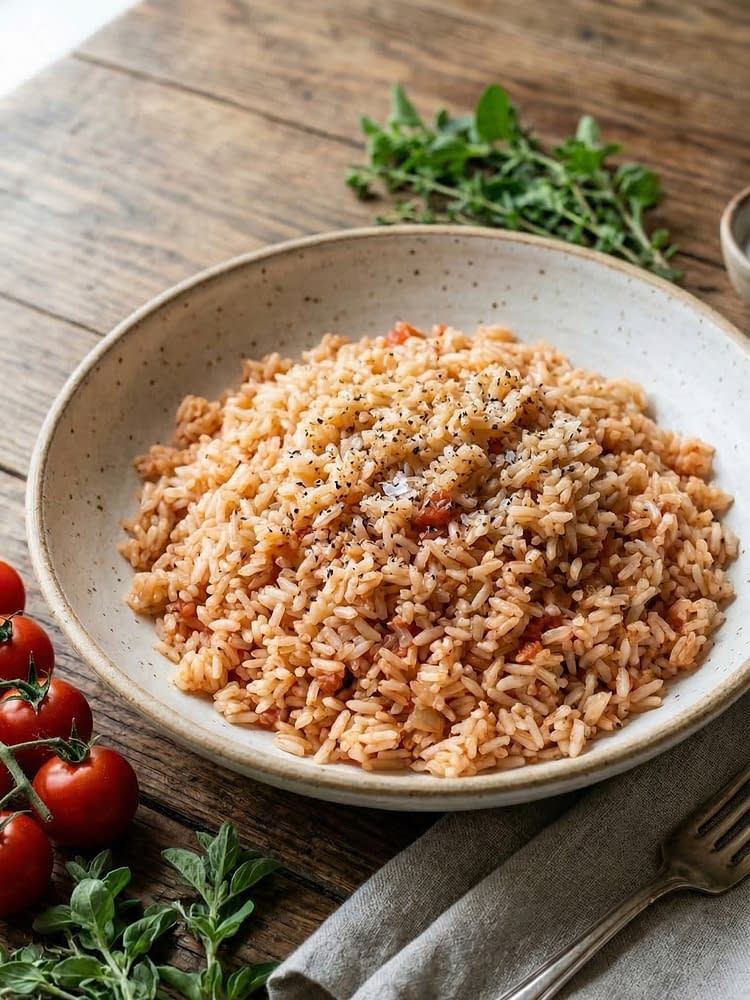

Tomato Basil Rice Pilaf is one of those dishes that quietly stands out. It doesn’t rely on heavy spices or complex techniques, yet it delivers a rich, layered flavor that feels both comforting and refined. With the natural sweetness of ripe tomatoes and the fresh aroma of basil, this rice dish offers a beautiful balance between simplicity and depth.
What makes this recipe truly special is how adaptable it is. You can serve it as a side dish alongside grilled meats, enjoy it as a light vegetarian main, or even prepare it in advance for meal prep. It’s the kind of recipe that fits easily into everyday cooking while still feeling a little elevated.
In this detailed guide, you’ll learn everything from choosing the right ingredients to mastering the cooking process, along with variations, tips, and serving ideas that will help you make the most of this dish.
What is Tomato Basil Rice Pilaf
Rice pilaf is a cooking method where rice is first sautéed in oil or butter before being cooked in liquid. This technique helps the grains stay separate and absorb more flavor. In Tomato Basil Rice Pilaf, the liquid is infused with tomatoes, creating a slightly tangy and savory base, while fresh basil adds a bright, herbal finish.
Unlike plain steamed rice, pilaf has more depth and texture. Each grain is coated in flavor, making it satisfying even without additional sauces or toppings.
Why You’ll Love This Recipe
Balanced flavor without heaviness
The combination of tomatoes and basil creates a fresh, slightly tangy profile that doesn’t feel too rich or overpowering.
Simple ingredients, big results
You don’t need anything complicated. Most ingredients are pantry staples, yet the result feels thoughtfully prepared.
Versatile for any meal
This dish can easily transition from a weekday lunch to a dinner side dish or even a light main course.
Meal-prep friendly
It stores well, reheats beautifully, and maintains its texture, making it ideal for busy schedules.
Ingredients Breakdown
Understanding your ingredients is key to achieving the best flavor and texture.
Rice
Long-grain rice such as basmati works best for this recipe. It cooks into separate, fluffy grains and absorbs the tomato broth without becoming sticky. Always rinse the rice thoroughly to remove excess starch.
Tomatoes
Fresh, ripe tomatoes are ideal. They bring natural sweetness and acidity. If tomatoes are not in season, high-quality canned tomatoes can be used as a substitute.
Basil
Fresh basil is essential for the final flavor. It adds brightness and a slightly sweet, herbal note that balances the acidity of the tomatoes.
Aromatics
Onions and garlic form the base of the dish. They add depth and a subtle sweetness when sautéed properly.
Liquid
Vegetable broth enhances the overall flavor, but water can be used if needed. Broth provides a richer and more satisfying result.
Olive Oil
A good-quality olive oil adds a light richness and helps carry the flavors throughout the dish.
Step-by-Step Cooking Guide
Preparing the rice
Start by rinsing the rice under cold water until the water runs clear. This step removes excess starch and prevents the rice from becoming gummy. Soaking the rice for about 15–20 minutes helps it cook evenly and results in longer, fluffier grains.
Sautéing the base
Heat olive oil in a pot over medium heat. Add finely chopped onions and cook until they become soft and slightly golden. This stage is important because it builds the base flavor. Add minced garlic and cook briefly until fragrant.
Cooking the tomato mixture
Add chopped or blended tomatoes to the pot. Let them cook down until the mixture thickens and the raw smell disappears. This step intensifies the tomato flavor and removes excess moisture.
Season with salt, pepper, and a small amount of sugar to balance acidity. The mixture should taste slightly tangy but well-rounded.
Toasting the rice
Add the drained rice to the pot and stir gently. Let it toast for a minute or two. This helps coat the grains with the tomato mixture and enhances the overall flavor.
Simmering the pilaf
Pour in the broth and bring the mixture to a gentle boil. Once it starts boiling, reduce the heat to low and cover the pot tightly. Let it cook undisturbed. Avoid lifting the lid frequently, as this releases steam and affects the cooking process.
Resting and finishing
Once the rice is cooked, turn off the heat and let it rest for a few minutes. This allows the steam to finish cooking the grains. Gently fluff the rice with a fork and mix in freshly chopped basil.
Tips for Perfect Tomato Basil Rice Pilaf
Use the right rice-to-liquid ratio
Too much liquid can make the rice mushy, while too little can leave it undercooked. Stick to measured quantities.
Avoid over-stirring
Once the rice starts cooking, avoid stirring too much. This can break the grains and make the texture sticky.
Let it rest
Resting the rice after cooking is just as important as the cooking itself. It improves texture and flavor distribution.
Adjust acidity carefully
Tomatoes can vary in acidity. Taste your mixture and adjust with a small amount of sugar if needed.
Variations to Try
Spiced Tomato Rice Pilaf
Add cumin, paprika, or a pinch of chili flakes for a warmer, slightly spicy version.
Vegetable Tomato Basil Pilaf
Mix in vegetables like carrots, peas, or bell peppers for added texture and nutrition.
Protein-Enhanced Version
Add grilled chicken, chickpeas, or tofu to turn this into a complete meal.
Creamy Tomato Basil Rice
Stir in a small amount of cream or coconut milk at the end for a richer variation.
Serving Suggestions
Tomato Basil Rice Pilaf pairs well with a wide range of dishes.
As a side dish
Serve it alongside grilled chicken, roasted vegetables, or fish for a balanced meal.
As a main course
Enjoy it on its own with a simple salad or yogurt on the side.
For gatherings
It works well as part of a larger spread, especially for casual dinners or small gatherings.
Storage and Reheating
Refrigeration
Store leftover rice in an airtight container in the refrigerator for up to three days.
Freezing
You can freeze portions for up to one month. Make sure the rice is completely cooled before freezing.
Reheating
Add a splash of water before reheating to restore moisture. Heat gently on the stovetop or in the microwave.
Common Mistakes to Avoid
Using too much water
This can lead to soft, mushy rice instead of a fluffy pilaf texture.
Skipping the sauté step
This step builds flavor. Skipping it will result in a flatter taste.
Adding basil too early
Fresh basil should be added at the end to preserve its aroma and color.
Nutritional Overview
Tomato Basil Rice Pilaf is relatively light and nutritious. It provides carbohydrates for energy, along with vitamins from tomatoes and herbs. Using olive oil adds healthy fats, making it a balanced addition to your meals.
Conclusion
Tomato Basil Rice Pilaf is a recipe that proves simple ingredients can create something truly satisfying. With its light yet flavorful profile, it’s a dish you can return to again and again without it ever feeling repetitive.
If you’re cooking for yourself, your family, or guests, this dish adapts easily and delivers consistent results. Once you understand the basic technique, you can adjust and personalize it to suit your taste.
It’s not just a recipe—it’s a reliable, comforting addition to your everyday cooking.
Tomato Basil Rice Pilaf Recipe
A fragrant and comforting Tomato Basil Rice Pilaf made with ripe tomatoes, fresh basil, and perfectly cooked rice. This easy stovetop dish is light, flavorful, and ideal as a side or a simple main, combining classic Mediterranean-inspired ingredients into a wholesome, budget-friendly meal.
Ingredients
For the Rice Base
For the Tomato Flavor
For the Liquid & Herbs
Optional Garnish
Instructions
Prepare the Rice
- Wash the basmati rice thoroughly until the water runs clear. Soak it in water for about 20 minutes. This helps the grains cook evenly and remain fluffy. Drain and set aside before cooking.
Sauté the Aromatics
- Heat olive oil in a medium-sized pot over medium heat. Add chopped onions and sauté for 3–4 minutes until soft and slightly golden. Stir in minced garlic and cook for another 30 seconds until fragrant.
Build the Tomato Base
- Add the chopped or pureed tomatoes along with tomato paste. Cook the mixture for 6–8 minutes, stirring occasionally, until it thickens and the oil begins to separate slightly. Season with salt, black pepper, and sugar to balance the acidity.
Add Rice and Liquid
- Add the drained rice into the tomato mixture and stir gently to coat each grain with the sauce. Pour in the vegetable broth and add dried oregano if using. Mix well and bring everything to a gentle boil.
Cook the Pilaf
- Once boiling, reduce the heat to low, cover the pot with a tight-fitting lid, and let it simmer for 15–18 minutes. Avoid opening the lid frequently to ensure proper steaming.
Add Fresh Basil & Rest
- Turn off the heat and let the rice rest, covered, for 5 minutes. Then gently fluff with a fork and mix in freshly chopped basil. Add a small amount of butter if desired for richness.
Serve
- Serve warm, garnished with extra basil or a light sprinkle of cheese if preferred. This dish pairs well with grilled vegetables, chicken, or can be enjoyed on its own.
Note
Use ripe, fresh tomatoes for the best natural flavor.
For extra depth, you can lightly toast the rice in oil before adding liquid.
Substitute basil with parsley or cilantro if needed, though flavor will differ.
Store leftovers in an airtight container in the refrigerator for up to 3 days.
Reheat with a splash of water to restore moisture.