
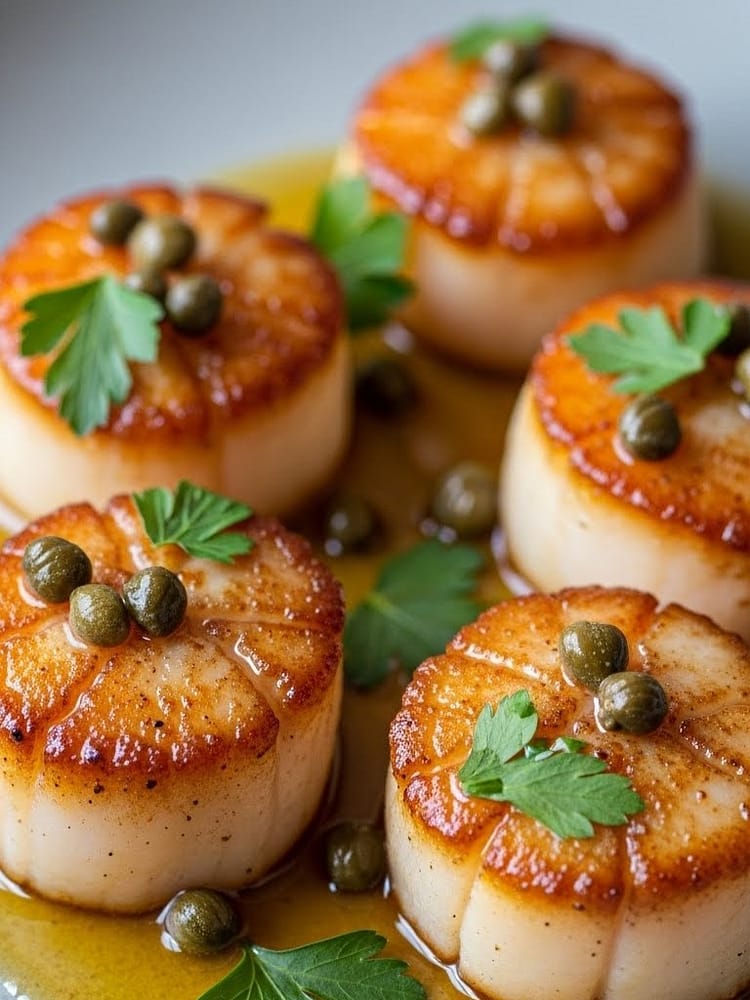

Pan-Seared Scallops with Brown Butter Caper Sauce is one of those dishes that immediately elevates a home-cooked meal into something restaurant-worthy. The contrast of the golden crust on the scallops with the silky brown butter sauce creates a balance of taste and texture that feels luxurious but remains wildly accessible, even for those who don’t cook seafood very often. What makes this recipe truly special is how quickly it comes together, how few ingredients you actually need, and how flexible the final dish can be in terms of serving options. Whether you want to impress dinner guests or treat yourself to something refined and satisfying, this recipe delivers every single time.
In this long, detailed, and reader-friendly guide, you’ll find a complete walkthrough of the process—from choosing the right scallops to preparing the sauce to plating the final dish beautifully. Along the way, you’ll get professional tips, common mistakes to avoid, alternative flavor variations, and thoughtful suggestions for how to pair and serve this meal. By the end of this post, you’ll not only know how to make Pan-Seared Scallops with Brown Butter Caper Sauce, but you’ll also understand the deeper cooking techniques behind it, allowing you to repeat the dish confidently or customize it to match your own kitchen style.
Why This Recipe Works
The success of Pan-Seared Scallops with Brown Butter Caper Sauce lies in a few core principles of great cooking—proper searing, controlled browning, balanced acidity, and thoughtful aromatics.
Perfect Sear Through Correct Technique
A great sear is achieved by high heat, dry scallops, and minimal movement. This combination creates the signature golden exterior that locks in moisture and produces the slightly sweet flavor that scallops are known for.
Depth of Flavor from Brown Butter
Brown butter is simply regular butter that has been gently cooked until the milk solids toast. This toasted flavor adds nuttiness that pairs beautifully with the natural sweetness of the scallops.
Brightness from Lemon and Capers
Brown butter can be rich on its own, so adding fresh lemon juice and capers helps cut through that richness with acidity and brininess. This balance keeps the dish from feeling heavy and brings forward each individual flavor.
Quick Cooking Time
Scallops cook in just a few minutes, making this dish ideal for fast dinners. Despite the short cooking time, the flavor is incredibly complex due to the layered sauce.
Ingredients
Below is a detailed breakdown of every ingredient used in Pan-Seared Scallops with Brown Butter Caper Sauce and the role each one plays in the recipe.
Scallops
- 450 g large sea scallops, patted very dry
- 0.5 teaspoon sea salt
- 0.25 teaspoon black pepper
- 1.5 tablespoons olive oil
- 1 tablespoon unsalted butter
Brown Butter Caper Sauce
- 4 tablespoons unsalted butter
- 2 cloves garlic, minced
- 1.5 tablespoons capers, drained
- 1 tablespoon freshly squeezed lemon juice
- A pinch of sea salt
- 0.25 teaspoon red pepper flakes (optional)
- 1 tablespoon fresh parsley, finely chopped
How to Choose the Best Scallops
Selecting high-quality scallops affects both the flavor and texture of your dish. Here’s what to look for:
Dry vs. Wet Scallops
Dry scallops are natural, untreated, and far superior for searing. Wet scallops are soaked in a chemical preservative that adds moisture and prevents caramelization. If the scallops look overly white or feel slippery, they are likely wet scallops.
Size Matters
Larger scallops, often labeled “jumbo” or “U10–U15,” sear better and stay tender. Smaller scallops cook too quickly and risk becoming rubbery.
Smell and Appearance
Fresh scallops should smell like the ocean—not fishy—and should appear firm, not mushy or slimy.
Instructions
Step 1: Prepare the Scallops
Pat the scallops dry with paper towels. Removing excess moisture is essential because moisture creates steam, preventing a golden crust from forming. Once dry, season both sides lightly with sea salt and black pepper. Let them sit for a few minutes while you heat the pan.
Step 2: Heat the Pan
Place a large stainless-steel or cast-iron skillet on medium-high heat. Add the olive oil and allow it to heat until it begins to shimmer. A shimmering surface signals that the oil is hot enough to sear without sticking.
Step 3: Sear the Scallops
Gently lay the scallops into the pan, making sure the flat side is down. Avoid overcrowding the pan—this creates steam and reduces browning. Let the scallops cook undisturbed for 2–3 minutes. When the bottom forms a deep golden brown crust, flip them. Add 1 tablespoon of butter and let them cook for another 1–2 minutes until the centers are just opaque.
Step 4: Transfer the Scallops
Immediately remove the scallops from the pan and place them onto a warm plate. Residual heat can overcook them if they remain in the hot skillet, so it’s important to move them promptly.
Step 5: Make the Brown Butter
Lower the heat the medium and add the 4 tablespoons of butter into the same skillet. Allow the butter to melt and foam. The milk solids will sink to the bottom and begin to brown, releasing a nutty aroma. Stir occasionally and watch closely to prevent burning.
Step 6: Add Garlic and Capers
Once the butter is golden brown, add the garlic and capers. Stir and cook for 30 seconds. The garlic will release fragrance but should not turn dark.
Step 7: Add Lemon and Seasonings
Pour in the lemon juice. The butter will bubble as the liquid hits the pan. Add red pepper flakes (if using) and a small pinch of sea salt. Finish by stirring in the parsley.
Step 8: Combine and Serve
Return the scallops to the pan, spooning the warm sauce over them. Transfer to plates and drizzle extra sauce on top. Serve immediately for the best texture and flavor.
Common Mistakes to Avoid
Overcrowding the Pan
Scallops need space. If overcrowded, they steam instead of searing, resulting in pale, soggy scallops.
Using Low Heat
Low heat prevents caramelization. A hot pan is essential for the golden crust.
Overcooking the Scallops
Perfect scallops have a tender, slightly translucent center. If fully opaque throughout, they are likely overcooked.
Burning the Brown Butter
Brown butter is delicate. Once it starts browning, it can burn quickly. Adjust heat accordingly.
Serving Suggestions
Over Creamy Mashed Potatoes
The silky sauce pairs beautifully with mashed potatoes, creating a decadent combination.
With Angel Hair Pasta
Toss light pasta with olive oil, garlic, and fresh herbs, then top with scallops.
Over Lemon Rice
The citrus notes complement the lemon in the sauce.
Alongside Steamed Vegetables
Asparagus, green beans, or sautéed spinach make excellent, balanced sides.
Flavor Variations
Lemon-Herb Variation
Add extra lemon zest and more fresh herbs such as dill, chives, or thyme.
Spicy Variation
Increase the red pepper flakes or add a dash of chili oil into the sauce.
Creamy Brown Butter Sauce
Stir 1–2 tablespoons of heavy cream into the sauce for a velvety finish.
Garlic-Lovers Version
Increase garlic to 3–4 cloves for a stronger flavor foundation.
Storage and Reheating Instructions
Refrigeration
Store cooked scallops in an airtight container for up to 24 hours. Seafood does not keep long, so it’s best eaten fresh.
Reheating
Reheat on low heat in a skillet with a spoonful of butter. Avoid microwaving—this makes scallops tough and rubbery.
Freezing
Not recommended. Scallops lose their texture when frozen after cooking.
Additional Tips from a Chef
Choosing the Right Pan
Cast-iron or stainless steel is best. Nonstick pans cannot achieve the same sear.
Patting Dry Multiple Times
If the scallops release liquid while resting, dry them again before cooking.
Using High-Quality Butter
Because brown butter is a major flavor component, the quality of butter matters.
Season Lightly
Scallops are naturally sweet and delicate. Too much seasoning can overpower them.
Conclusion
Pan-Seared Scallops with Brown Butter Caper Sauce is a beautifully simple yet refined dish that highlights the bold flavors of seafood and the nutty aroma of brown butter. While it feels gourmet, it’s surprisingly quick to prepare, making it a perfect choice for both weeknight meals and special occasions. By following the techniques and tips in this guide—drying the scallops thoroughly, heating the pan properly, watching the butter closely, and balancing the sauce with acidity—you can produce consistently delicious results.
Served over pasta, rice, potatoes, or simply on their own, these scallops deliver elegance and flavor every time. With this detailed walkthrough, you’re not only prepared to cook this recipe confidently but also equipped to adapt it to match your personal preferences. Enjoy the ease, flavor, and satisfaction that come with mastering this restaurant-style dish at home.
Pan-Seared Scallops with Brown Butter Caper Sauce Recipe
This Pan-Seared Scallops with Brown Butter Caper Sauce recipe creates a restaurant-quality seafood dish right at home. Juicy golden scallops are seared to perfection, then finished with a rich, nutty brown butter sauce infused with garlic, capers, and fresh lemon. It’s simple, elegant, and ideal for a quick gourmet dinner.
Ingredients
For the Scallops
For the Brown Butter Caper Sauce
Instructions
Prepare the Scallops
-
Lay the scallops on a paper towel and pat both sides very dry. Moisture prevents proper searing, so take your time. Once dry, season lightly with sea salt and black pepper.
Heat the Pan
-
Place a large stainless-steel or cast-iron skillet over medium-high heat. Add olive oil and let it heat until shimmering. The pan should be very hot but not smoking.
Sear the Scallops
-
Place the scallops in the pan, flat side down. Avoid overcrowding. Sear for 2–3 minutes without moving them. When a deep golden crust forms, flip them. Add 1 tbsp butter and cook for another 1–2 minutes until just opaque in the center.
Transfer Scallops and Keep Warm
-
Remove the scallops from the pan immediately to prevent overcooking. Set aside on a warm plate.
Make the Brown Butter
-
In the same pan, lower the heat to medium and add 4 tbsp butter. Let it melt, bubble, and turn golden brown with a nutty aroma. This takes about 2–3 minutes. Scrape the brown bits from the pan for added flavor.
Add Garlic and Capers
-
Add minced garlic and capers into the brown butter. Cook for 30 seconds until fragrant. Do not burn the garlic.
Finish the Sauce
-
Add lemon juice, red pepper flakes (optional), and chopped parsley. Stir well. Taste and adjust seasoning with a pinch of salt.
Assemble & Serve
-
Return the scallops to the pan and spoon the hot brown butter sauce over them. Plate immediately and drizzle extra sauce on top.
Note
Dry Scallops Are Key: Moisture prevents browning. Pat multiple times if needed.
Don’t Overcook: Scallops cook quickly. Overcooking can make them rubbery.
Serving Ideas: Serve over mashed potatoes, buttered pasta, risotto, or a simple salad.
Storage: Best eaten fresh. However, cooked scallops can be stored for 1 day in the refrigerator. Reheat gently in a pan.
Variations:
- Add a splash of white grape juice (non-alcoholic) for sweetness.
- Swap parsley with dill or chives for a different aroma.


