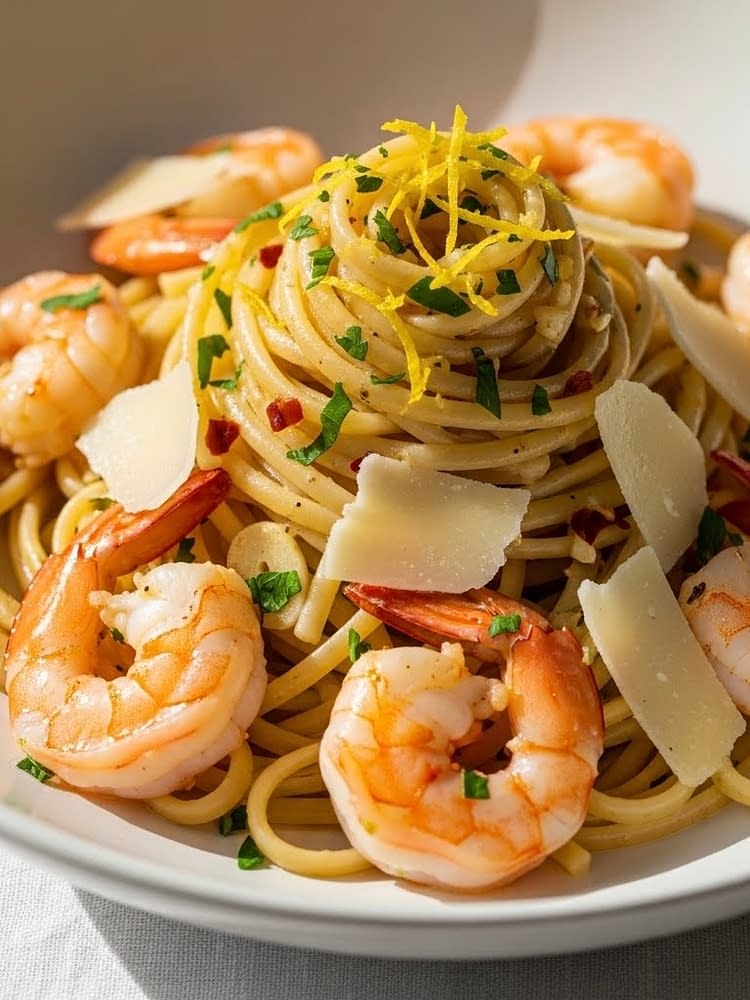

Lemon-Garlic Shrimp Linguine is one of those dishes that feels luxurious yet surprisingly simple to prepare. It combines tender shrimp, fragrant garlic, and bright lemon with perfectly cooked linguine, creating a balanced pasta that is light, satisfying, and full of flavor. Whether you are cooking for a quiet weeknight dinner or serving guests on a special occasion, this dish consistently delivers restaurant-quality results at home.
What makes Lemon-Garlic Shrimp Linguine stand out is its simplicity. Instead of relying on heavy sauces, the recipe uses olive oil, pasta water, and fresh lemon juice to create a silky coating that clings to every strand of pasta. The shrimp remain the star of the dish, enhanced rather than masked by the sauce.
In this detailed guide, you will learn everything you need to know about making the perfect Lemon-Garlic Shrimp Linguine, from ingredient selection to cooking techniques, flavor variations, and serving ideas. This post is designed to help both beginners and experienced home cooks feel confident in the kitchen.
Why Lemon-Garlic Shrimp Linguine Is So Popular
A Perfect Balance of Flavors
One of the biggest reasons Lemon-Garlic Shrimp Linguine is so widely loved is its balance. The garlic provides warmth and depth, the lemon adds brightness and freshness, and the shrimp bring a naturally sweet, savory seafood flavor. None of these elements overpower the others.
Light Yet Satisfying
Unlike cream-based pasta dishes, Lemon-Garlic Shrimp Linguine feels light on the stomach while still being filling. The olive oil-based sauce coats the pasta without weighing it down, making it ideal for lunch or dinner, especially in warmer months.
Quick and Practical
This dish comes together in under 30 minutes, making it perfect for busy schedules. With minimal prep and straightforward steps, Lemon-Garlic Shrimp Linguine is an excellent choice for weeknight cooking without sacrificing taste.
Understanding the Key Ingredients
Shrimp
Shrimp are the heart of Lemon-Garlic Shrimp Linguine. Medium to large shrimp work best because they stay juicy and are visually appealing when served. Fresh shrimp offer the best flavor, but frozen shrimp are also a reliable option if thawed properly.
Key tips for shrimp selection:
- Choose shrimp that are firm and smell clean, not fishy
- Peel and devein before cooking for the best texture
- Pat dry before seasoning to ensure proper searing
Linguine Pasta
Linguine is ideal for this recipe because its flat shape holds the sauce well. It allows the olive oil, garlic, and lemon to cling to each strand, ensuring every bite is flavorful.
If linguine is unavailable, spaghetti or fettuccine can be used as substitutes, but linguine offers the best balance between thickness and sauce absorption.
Garlic
Fresh garlic is essential. Pre-minced or jarred garlic lacks the aroma and sharpness needed for Lemon-Garlic Shrimp Linguine. Finely minced garlic releases its oils quickly, infusing the olive oil with rich flavor.
Lemon
Both lemon zest and lemon juice are used in this dish. The zest provides aromatic citrus oils, while the juice adds acidity and brightness. Always use fresh lemons, as bottled juice does not deliver the same freshness.
Olive Oil
High-quality extra virgin olive oil is crucial, as it forms the base of the sauce. Its flavor directly impacts the final dish, so choose one with a smooth, balanced profile.
Preparing Ingredients the Right Way
Prepping Shrimp for Maximum Flavor
Before cooking, shrimp should be peeled, deveined, and thoroughly dried. Moisture prevents proper searing and can cause shrimp to steam instead of sauté. Season the shrimp lightly with salt and pepper just before cooking to avoid drawing out moisture too early.
Cooking Pasta Correctly
Cooking the linguine to al dente is essential. Overcooked pasta becomes mushy and fails to hold the sauce. Salt the pasta water generously; this is the only chance to season the pasta itself.
Always reserve some pasta cooking water. The starch in the water helps emulsify the sauce and create a glossy finish.
Step-by-Step Guide to Lemon-Garlic Shrimp Linguine
Cooking the Linguine
Bring a large pot of water to a rolling boil and add salt. Cook the linguine according to package instructions until al dente. Before draining, reserve at least one cup of pasta water.
Drain the pasta and set it aside while preparing the sauce.
Sautéing the Shrimp
Heat olive oil in a wide pan over medium heat. Add the shrimp in a single layer, making sure not to overcrowd the pan. Cook for one to two minutes per side until the shrimp turn pink and slightly golden.
Remove the shrimp from the pan immediately to prevent overcooking.
Building the Lemon-Garlic Sauce
In the same pan, add a bit more olive oil if needed and lower the heat slightly. Add minced garlic and cook gently until fragrant, about 30 seconds. Avoid browning the garlic, as it can turn bitter.
Add lemon zest, lemon juice, and a splash of reserved pasta water. Stir gently to combine, creating a light, aromatic sauce.
Combining Pasta and Shrimp
Add the cooked linguine to the pan and toss it in the sauce. Gradually add more pasta water as needed to achieve a silky consistency. Return the shrimp to the pan and toss everything together for about one minute.
Remove from heat and let the pasta rest briefly before serving.
Common Mistakes to Avoid
Overcooking the Shrimp
Shrimp cook very quickly. Leaving them on the heat too long results in a rubbery texture. Always remove them as soon as they turn pink and opaque.
Burning the Garlic
Garlic should be fragrant, not brown. Burnt garlic can ruin the flavor of Lemon-Garlic Shrimp Linguine. Keep the heat moderate and watch closely.
Skipping Pasta Water
Pasta water is essential for creating a cohesive sauce. Without it, the pasta may feel dry or oily instead of silky and well-coated.
Flavor Variations and Customizations
Spicy Lemon-Garlic Shrimp Linguine
Add red chili flakes or a small amount of chili oil to the sauce for a gentle heat that complements the lemon and garlic.
Creamy Lemon-Garlic Shrimp Linguine
For a richer version, add a small amount of halal-certified cream or milk at the end, stirring gently to maintain balance without overpowering the dish.
Vegetable Add-Ins
Spinach, cherry tomatoes, zucchini, or asparagus make excellent additions. Add them during the sauce stage so they cook lightly and retain their texture.
Herb Variations
While parsley is classic, fresh basil or dill can add a different aromatic profile to Lemon-Garlic Shrimp Linguine.
Serving Suggestions
Lemon-Garlic Shrimp Linguine pairs beautifully with simple sides that do not compete with its delicate flavors.
Serving ideas:
- Fresh green salad with lemon vinaigrette
- Garlic bread or crusty bread
- Steamed or roasted vegetables
- Light soup as a starter
This dish works equally well for casual meals and more formal settings, making it a versatile addition to your recipe collection.
Storage and Reheating Tips
Lemon-Garlic Shrimp Linguine is best enjoyed fresh, but leftovers can be stored in an airtight container in the refrigerator for up to two days.
When reheating:
- Use low heat on the stovetop
- Add a splash of water or olive oil to refresh the sauce
- Avoid microwaving for too long, as shrimp can become tough
Nutritional Benefits
Shrimp are a great source of lean protein and essential minerals. Olive oil provides healthy fats, while lemon contributes vitamin C. When prepared thoughtfully, Lemon-Garlic Shrimp Linguine offers a satisfying meal that feels indulgent without being heavy.
Why This Recipe Works Every Time
The success of Lemon-Garlic Shrimp Linguine lies in technique rather than complexity. By respecting each ingredient and cooking it properly, you achieve a dish that feels refined yet approachable. The balance of acid, fat, and protein ensures consistent results, even for beginner cooks.
Final Thoughts
Lemon-Garlic Shrimp Linguine is more than just a pasta dish. It is a reliable, flavorful recipe that adapts to different tastes and occasions. With its bright citrus notes, aromatic garlic, and tender shrimp, it offers a timeless combination that never feels outdated.
You are expanding your seafood repertoire or looking for a dependable pasta recipe, Lemon-Garlic Shrimp Linguine deserves a place in your kitchen rotation. Take your time, follow the steps, and enjoy the process as much as the final dish.
Lemon-Garlic Shrimp Linguine Recipe for a Quick and Flavorful Dinner
A bright, elegant pasta dish made with juicy shrimp, fresh garlic, lemon zest, and silky linguine tossed in a light olive oil sauce. This Lemon-Garlic Shrimp Linguine is quick to prepare, full of flavor, and perfect for both weeknight dinners and special occasions.
Ingredients
For the Pasta Base
For the Shrimp
For the Lemon-Garlic Sauce
For Garnish
Instructions
Cook the Linguine
- Bring a large pot of water to a rolling boil. Add salt, then cook the linguine according to package instructions until al dente. Reserve 1 cup of pasta water before draining. Set pasta aside.
Season the Shrimp
- Pat the shrimp dry using a kitchen towel. Season evenly with salt, black pepper, and paprika. This ensures the shrimp cooks evenly and develops flavor without becoming watery.
Sauté the Shrimp
- Heat 2 tablespoons olive oil in a wide pan over medium heat. Add shrimp in a single layer. Cook for 1–2 minutes per side until pink and lightly golden. Remove shrimp from the pan and set aside to prevent overcooking.
Build the Lemon-Garlic Sauce
- In the same pan, add remaining olive oil. Lower heat slightly and add minced garlic. Sauté gently for 30–40 seconds until fragrant, not browned. Add lemon zest, lemon juice, chili flakes, and reserved pasta water. Stir well to emulsify the sauce.
Combine Pasta and Shrimp
- Add cooked linguine to the pan and toss gently until coated with the sauce. Return shrimp to the pan and cook together for 1 minute. Adjust seasoning if needed.
Finish and Rest
- Turn off heat. Sprinkle with chopped parsley and optional Parmesan cheese. Let the pasta rest for 2 minutes to absorb flavors before serving.
Note
- Use fresh shrimp for the best flavor, but frozen shrimp can be used if fully thawed and dried.
- Do not overcook shrimp; they turn rubbery very quickly.
- Add extra pasta water if the sauce feels dry.
- For a richer version, add 1 tbsp butter at the end.
- Store leftovers in an airtight container for up to 2 days in the refrigerator.