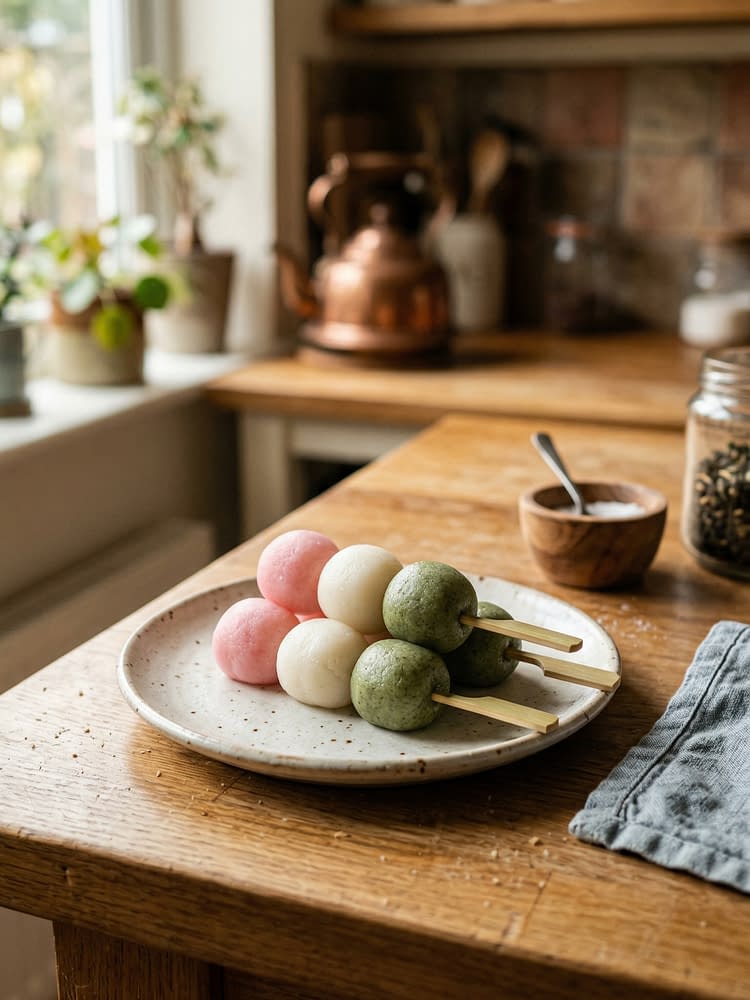

Hanami dango dessert is one of the most visually recognizable traditional sweets from Japan. With its soft, chewy texture and its signature trio of colors—pink, white, and green—it represents the beauty of spring and the fleeting charm of cherry blossoms.
The word “hanami” refers to the Japanese custom of flower viewing, especially cherry blossoms, while “dango” refers to small dumplings made from rice flour. Together, hanami dango dessert is more than just food—it is a seasonal symbol tied to celebration, nature, and simplicity.
What makes this dessert truly special is its balance of aesthetics and taste. It is mildly sweet, subtly flavored, and incredibly satisfying due to its chewy texture. Unlike many Western desserts, it does not rely on heavy sugar or fats, making it a lighter and more delicate treat.
In this guide, you will learn everything about hanami dango dessert—from its cultural significance to step-by-step preparation, along with expert tips to ensure perfect results.
What Is Hanami Dango Dessert
Hanami dango dessert is a traditional Japanese confection made from glutinous rice flour. The dough is shaped into small balls, boiled until cooked, and then skewered in a specific order: pink on top, white in the middle, and green at the bottom.
Symbolism Behind the Colors
Each color in hanami dango dessert carries meaning:
- Pink represents cherry blossoms in full bloom
- White symbolizes the lingering snow of early spring
- Green reflects new growth and fresh grass
This combination tells a story of seasonal transition, making the dessert deeply connected to nature.
Ingredients Overview
The beauty of hanami dango dessert lies in its simplicity. With only a few ingredients, you can create something visually stunning and culturally meaningful.
Core Ingredients
- Glutinous rice flour (mochiko or shiratamako)
- Sugar
- Water
Natural Coloring Options
- Pink: strawberry powder or beetroot powder
- Green: matcha powder
- White: plain dough
Optional Glaze
Some versions include a sweet soy glaze (mitarashi), which adds depth of flavor through a balance of sweet and savory notes.
Choosing the Right Rice Flour
Not all rice flours are the same, and choosing the right one is essential for achieving the correct texture.
Mochiko vs Shiratamako
- Mochiko: more widely available, slightly denser texture
- Shiratamako: finer texture, softer and smoother result
If you want a more authentic, soft bite, shiratamako is preferred. However, mochiko works perfectly well for beginners.
Step-by-Step Guide to Making Hanami Dango Dessert
Preparing the Dough
Start by combining glutinous rice flour and sugar in a bowl. Gradually add warm water while mixing. The goal is to form a smooth dough that feels soft and pliable, similar to clay.
Avoid adding too much water at once. The dough should not be sticky or crumbly.
Dividing and Coloring the Dough
Once the dough is ready, divide it into three equal portions.
- Leave one portion plain for white
- Add pink coloring to the second portion
- Mix matcha powder into the third portion
Knead each portion thoroughly to ensure even color distribution.
Shaping the Dumplings
Roll each portion into small balls, about 2 to 3 centimeters in diameter. Try to keep them uniform so they cook evenly.
Cooking the Dango
Bring a pot of water to a rolling boil. Carefully drop the dumplings into the water.
They will sink initially and then float to the surface once cooked. After floating, allow them to cook for an additional 2 to 3 minutes.
Cooling Process
Immediately transfer the cooked dumplings into cold water. This step is crucial for achieving the signature chewy texture.
Let them cool for a few minutes before handling.
Assembling the Skewers
Thread three dumplings onto each skewer in this order:
- Pink
- White
- Green
This arrangement is traditional and visually important for the hanami dango dessert.
Optional Glazing
If you prefer a richer flavor, prepare a simple glaze using sugar, soy sauce, and cornstarch.
Heat the mixture until it thickens, then brush it over the skewered dumplings for a glossy finish.
Texture and Flavor Profile
Hanami dango dessert is known for its unique texture rather than strong flavor.
Texture
- Soft and chewy
- Slightly elastic
- Smooth on the outside
Flavor
- Mild sweetness
- Subtle rice flavor
- Slight bitterness from matcha (green portion)
This balance makes it an excellent pairing with tea.
Expert Tips for Perfect Hanami Dango Dessert
Achieving the Ideal Dough Consistency
Always add water gradually. If the dough becomes too sticky, add a small amount of rice flour. If it is too dry, add a few drops of water.
Avoid Overcooking
Leaving the dumplings in boiling water for too long can make them overly soft and mushy.
Use Cold Water Immediately
The cold water bath stops the cooking process and helps maintain the chewy texture.
Keep Dumplings Moist
Dango can dry out quickly. Cover them with a damp cloth if not serving immediately.
Variations of Hanami Dango Dessert
Mitarashi Dango
This variation features a glossy sweet soy glaze. It adds a savory contrast to the mild dumplings.
Anko-Filled Dango
These dumplings are filled with sweet red bean paste, adding richness and sweetness.
Fruit-Flavored Dango
Modern versions include flavors like strawberry, mango, or even chocolate for a creative twist.
Serving Suggestions
Hanami dango dessert is traditionally served during outdoor gatherings under cherry blossom trees.
Pairing Ideas
- Green tea
- Matcha latte
- Light fruit tea
Presentation Tips
Arrange the skewers neatly on a ceramic plate. Adding a floral background or cherry blossom decoration enhances the visual appeal.
Storage and Shelf Life
Short-Term Storage
Store in an airtight container at room temperature for up to one day.
Refrigeration
Refrigerate for up to two days, but note that the texture may become firmer.
Reheating
Lightly steam or microwave with a damp cloth to restore softness.
Common Mistakes to Avoid
Using the Wrong Flour
Regular rice flour will not produce the same chewy texture.
Skipping the Cooling Step
This results in a less chewy and more sticky texture.
Uneven Sizing
Different sizes lead to uneven cooking.
Why Hanami Dango Dessert Is Worth Trying
Hanami dango dessert stands out because of its simplicity and cultural depth. It is easy enough for beginners yet meaningful enough to feel special.
It also offers a unique alternative to heavier desserts. Its light sweetness and satisfying texture make it suitable for a wide range of occasions.
Conclusion
Hanami dango dessert is more than just a sweet treat—it is a reflection of tradition, seasonality, and mindful simplicity. Its delicate flavors and symbolic colors make it a meaningful addition to any table.
If you are making it for a special occasion or simply trying something new, this dessert offers a rewarding experience from preparation to presentation. Once you master the technique, you will find yourself returning to it again and again, especially during spring.
Hanami Dango Recipe (Japanese Spring Festival Sweet Dumplings)
Hanami Dango is a traditional Japanese dessert made of soft, chewy rice dumplings served on skewers and colored in beautiful pink, white, and green layers. Popular during cherry blossom season, this naturally sweet, gluten-free treat is simple to make and perfect for spring gatherings or light desserts.
Ingredients
For the Dango Dough
Natural Coloring
Optional Glaze (Sweet Soy Sauce Glaze – Mitarashi)
Instructions
Prepare the Dough
- In a mixing bowl, combine glutinous rice flour and sugar. Gradually add warm water while mixing until a soft, smooth dough forms. The dough should not be sticky or too dry—it should feel like soft clay.
Divide and Color
- Divide the dough into three equal portions.
- Leave one portion plain (white)
- Mix pink coloring into one portion
- Add matcha powder to the third portion
- Knead each portion separately until the colors are evenly distributed.
Shape the Dumplings
- Roll each colored dough into small balls (about 2–3 cm in diameter). Keep them similar in size for even cooking.
Boil the Dango
- Bring a pot of water to a boil (100°C). Add the dumplings and cook until they float to the surface. Let them cook for another 2–3 minutes after floating.
Cool the Dumplings
- Remove the dumplings and immediately place them in cold water. This helps maintain their chewy texture. Let them cool for a few minutes.
Skewer the Dango
- Thread three dumplings onto each skewer in this order:
- Pink → White → Green (representing cherry blossoms, snow, and fresh grass).
Prepare the Glaze
- In a small saucepan, combine water, sugar, and soy sauce. Bring to a simmer. Add cornstarch slurry and stir until thickened into a glossy sauce. Brush or drizzle over the dango.
Note
Texture Tip: The dough should be soft but not sticky—adjust water slowly. Natural Coloring: You can use beet powder (pink) or pandan extract (green) instead of artificial coloring. Storage: Best eaten fresh, but you can store in an airtight container in the fridge for 1 day. Reheat slightly to soften. Variation: Add a sweet red bean paste filling inside the dumplings for extra flavor.