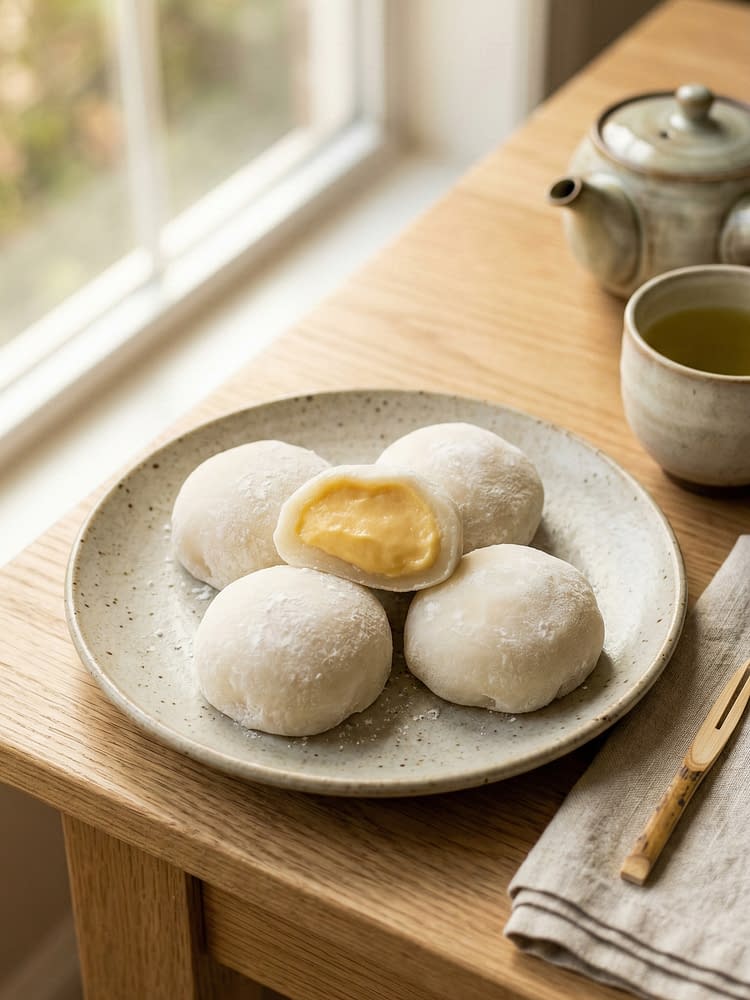

Creamy custard mochi is the kind of dessert that feels delicate, refined, and comforting all at once. With its soft, stretchy outer layer and smooth vanilla custard center, it offers a beautiful contrast of textures that instantly makes it memorable. The chewiness of the mochi wrapper combined with the silky richness of custard creates a dessert that feels luxurious without being overly heavy.
While mochi has deep roots in Japanese cuisine, filled mochi variations have become increasingly popular worldwide. From ice cream mochi to fruit-filled versions, there are many interpretations. Creamy custard mochi stands out because it balances subtle sweetness with a rich, creamy core that appeals to a wide range of tastes.
This detailed guide walks you through everything you need to know about making creamy custard mochi from scratch. From understanding the ingredients to mastering the texture, shaping techniques, storage tips, and creative variations, you will find every detail covered so you can achieve professional-quality results at home.
What Is Mochi?
Mochi is a traditional Japanese rice cake made from glutinous rice or glutinous rice flour, also known as sweet rice flour. Despite the name, glutinous rice flour does not contain gluten. It is naturally gluten-free and gets its name from its sticky texture when cooked.
Traditional mochi is made by steaming and pounding rice into a sticky paste. Modern home recipes often use glutinous rice flour mixed with water and sugar, then steamed or microwaved to create the same chewy texture with much less effort.
In creamy custard mochi, the soft rice dough acts as a wrapper for a rich custard filling. The result is a bite-sized dessert with a slightly elastic exterior and a smooth, creamy interior.
Why You Will Love Creamy Custard Mochi
There are many reasons why creamy custard mochi deserves a place in your dessert rotation.
First, the texture is truly unique. The outer layer is soft and stretchy, while the inside is velvety and rich. That contrast is what makes each bite satisfying.
Second, it is naturally gluten-free. If you or your guests avoid gluten, this dessert is an excellent choice.
Third, it is customizable. Once you understand the base recipe, you can easily experiment with flavors like matcha, chocolate, coffee, or fruit-infused custards.
Finally, creamy custard mochi looks elegant and impressive. Even though it is made with simple ingredients, the finished dessert feels refined enough for special occasions, tea gatherings, or celebrations.
Ingredients Overview
Understanding the ingredients is essential for mastering creamy custard mochi. Each component plays a specific role in texture and flavor.
For the Custard Filling
Whole milk
Egg yolks
Granulated sugar
Cornstarch
Unsalted butter
Vanilla extract
Salt
The custard filling is rich yet balanced. Egg yolks provide thickness and richness, while cornstarch stabilizes the custard so it holds its shape inside the mochi. Butter adds smoothness, and vanilla enhances the overall flavor.
For the Mochi Dough
Glutinous rice flour
Granulated sugar
Water
Neutral oil
Cornstarch or potato starch for dusting
Glutinous rice flour is the key to the chewy texture. Sugar lightly sweetens the dough, while water hydrates the flour and creates the sticky consistency when heated. A small amount of oil keeps the dough supple and easier to handle.
Cornstarch or potato starch is essential for dusting because the dough is extremely sticky.
Step-by-Step Guide to Making Creamy Custard Mochi
Preparing the Custard Filling
Start with the custard because it needs time to chill and firm up.
In a saucepan, whisk egg yolks, sugar, and cornstarch until smooth. Gradually add milk while whisking to prevent lumps. Place the saucepan over medium-low heat and stir continuously. The mixture will begin to thicken after several minutes.
Patience is important here. Do not rush by increasing the heat, as this can cause curdling. Stir gently but constantly, scraping the bottom and sides of the pan.
Once thickened to a pudding-like consistency, remove from heat. Stir in butter, vanilla extract, and a pinch of salt. The butter will melt into the custard, creating a glossy finish.
Transfer the custard to a bowl and press plastic wrap directly onto the surface to prevent a skin from forming. Refrigerate for at least one hour, or until firm enough to scoop.
Preparing the Mochi Dough
In a heatproof bowl, combine glutinous rice flour and sugar. Add water gradually while whisking to create a smooth batter. Stir in a small amount of neutral oil.
Steam the mixture over boiling water for 15 to 20 minutes, or microwave in one-minute intervals, stirring between each round. The dough will transform from opaque white to slightly translucent and thick.
When fully cooked, the dough will appear glossy and very sticky.
Handling and Kneading the Dough
Allow the dough to cool slightly until safe to touch. Generously dust your work surface with cornstarch. Transfer the dough onto the surface and dust the top.
Gently knead just enough to smooth it out. Avoid overworking the dough. The goal is a soft, elastic consistency that is pliable but not overly stiff.
Portioning the Custard
Once the custard is fully chilled, scoop small portions and shape them into balls. If the custard feels too soft, place the portions in the freezer for 15 minutes to firm up.
This step makes assembling creamy custard mochi much easier and cleaner.
Assembling the Mochi
Divide the mochi dough into equal portions. Flatten each piece into a small disc using your fingers or a rolling pin.
Place a custard ball in the center. Gently stretch the edges of the dough around the filling and pinch to seal. Roll lightly between your palms to create a smooth ball.
Dust off excess starch with a soft brush.
Allow the finished creamy custard mochi to rest for about 10 minutes before serving.
Expert Tips for Perfect Texture
Temperature control is critical. Custard should be thick but not stiff. Mochi dough should be warm and pliable when shaping.
Always use plenty of starch for dusting. Without it, the dough will stick to everything.
Do not overfill. Too much custard can cause tearing.
If the dough begins to harden, gently warm it for a few seconds to regain softness.
Work efficiently. Mochi dough dries out if exposed to air for too long.
Flavor Variations
Creamy custard mochi is versatile and easy to adapt.
Matcha Custard Mochi
Add one teaspoon of matcha powder to the milk while heating the custard for a subtle earthy flavor and beautiful green color.
Chocolate Custard Mochi
Stir melted dark chocolate into the finished custard for a rich chocolate center.
Coffee Custard Mochi
Dissolve instant coffee granules in warm milk before adding to the custard mixture.
Fruit-Infused Custard
Fold in finely chopped strawberries or mango into chilled custard for a fresh, fruity twist.
Serving Suggestions
Creamy custard mochi is best served slightly chilled or at cool room temperature.
Arrange on a ceramic plate and dust lightly with powdered sugar. Pair with green tea, jasmine tea, or a light milk tea.
For gatherings, place each piece in a small cupcake liner for an elegant presentation.
It also works beautifully as part of a dessert platter alongside fresh fruit and light sponge cake.
Storage and Shelf Life
Store creamy custard mochi in an airtight container in the refrigerator for up to two days.
Keep layers separated with parchment paper to prevent sticking.
Avoid freezing assembled mochi for extended periods, as the texture may harden and lose elasticity.
If refrigerated mochi becomes slightly firm, let it sit at room temperature for 10–15 minutes before serving.
Common Mistakes and How to Avoid Them
Overcooking the custard can cause it to become too thick. Cook gently and remove from heat once thickened.
Undercooking the mochi dough results in a raw flour taste. Ensure the dough turns glossy and translucent.
Not using enough starch while shaping leads to sticking and tearing.
Overfilling can cause leakage. Use moderate amounts of custard.
Nutritional Considerations
Creamy custard mochi is a dessert meant to be enjoyed in moderation. It contains eggs, milk, and sugar, which provide richness and flavor.
Because it is naturally gluten-free, it is suitable for those avoiding gluten. You can also substitute plant-based milk and butter for a dairy-free version.
Final Thoughts
Creamy custard mochi is a dessert that combines simplicity with elegance. It highlights how a few humble ingredients can create something refined and memorable. The chewy rice exterior and silky custard center make it a standout treat for tea time, celebrations, or when you simply want something special.
With patience, proper technique, and attention to detail, you can confidently prepare creamy custard mochi at home. Once you master the base recipe, the possibilities for flavor variations are endless.
If you are making it for guests or enjoying it quietly with a cup of tea, this dessert offers comfort, texture, and a touch of artistry in every bite.
Creamy Custard Mochi
Soft, chewy, and delicately sweet, Creamy Custard Mochi combines the stretchy texture of traditional Japanese mochi with a rich, velvety vanilla custard filling. This homemade dessert is gluten-free, elegant, and surprisingly simple to prepare. Perfect for tea time, parties, or special occasions, these pillowy mochi bites melt in your mouth with every bite.
Ingredients
For the Custard Filling:
For the Mochi Dough:
Instructions
Prepare the Custard Base
- In a medium saucepan, whisk together the egg yolks, sugar, and cornstarch until smooth and pale. Slowly pour in the milk while whisking continuously to prevent lumps. Place the saucepan over medium-low heat and cook gently, stirring constantly with a silicone spatula. The mixture will gradually thicken after about 5–8 minutes. Once thick and creamy, remove from heat and stir in butter, vanilla extract, and salt. Mix until smooth.
- Transfer the custard to a bowl, cover the surface directly with plastic wrap to prevent a skin from forming, and refrigerate for at least 1 hour until firm.
Prepare the Mochi Dough
- In a heatproof bowl, mix glutinous rice flour and sugar. Gradually add water while whisking until the batter is smooth and lump-free. Stir in the oil.
- Cover the bowl loosely with plastic wrap and steam over boiling water for about 15–20 minutes, or microwave in 1-minute intervals (stirring between each interval) until the dough turns thick, sticky, and slightly translucent.
Cool and Knead the Dough
- Allow the mochi dough to cool slightly until safe to handle but still warm. Generously dust your working surface with cornstarch. Transfer the dough onto the surface and dust the top as well. Gently knead a few times until smooth and elastic. Avoid over-kneading; the goal is a soft, stretchy consistency.
Portion the Custard
- Remove the chilled custard from the refrigerator. Scoop small spoonfuls (about 1 tablespoon each) and roll into small balls. Place them on a tray lined with parchment paper. If the custard feels too soft, freeze the balls for 15–20 minutes to firm them up.
Shape the Mochi
- Divide the mochi dough into 10–12 equal portions. Flatten each piece into a round disc about 8–10 cm wide. Place one custard ball in the center. Carefully stretch the edges of the dough around the filling and pinch to seal tightly. Roll gently in your hands to form a smooth ball.
- Dust off excess starch using a pastry brush.
Final Rest
- Let the assembled mochi rest at room temperature for 10–15 minutes before serving. This allows the texture to settle and become perfectly soft and chewy.
Note
- Always keep the mochi dough covered to prevent drying out.
- If the dough becomes too sticky, lightly dust with additional cornstarch.
- Store in an airtight container in the refrigerator for up to 2 days. Best consumed fresh.
- Avoid freezing assembled mochi for long periods, as texture may harden.
- You may flavor the custard with matcha powder, cocoa powder, or citrus zest for variations.
- For extra elegance, dust lightly with powdered sugar before serving.