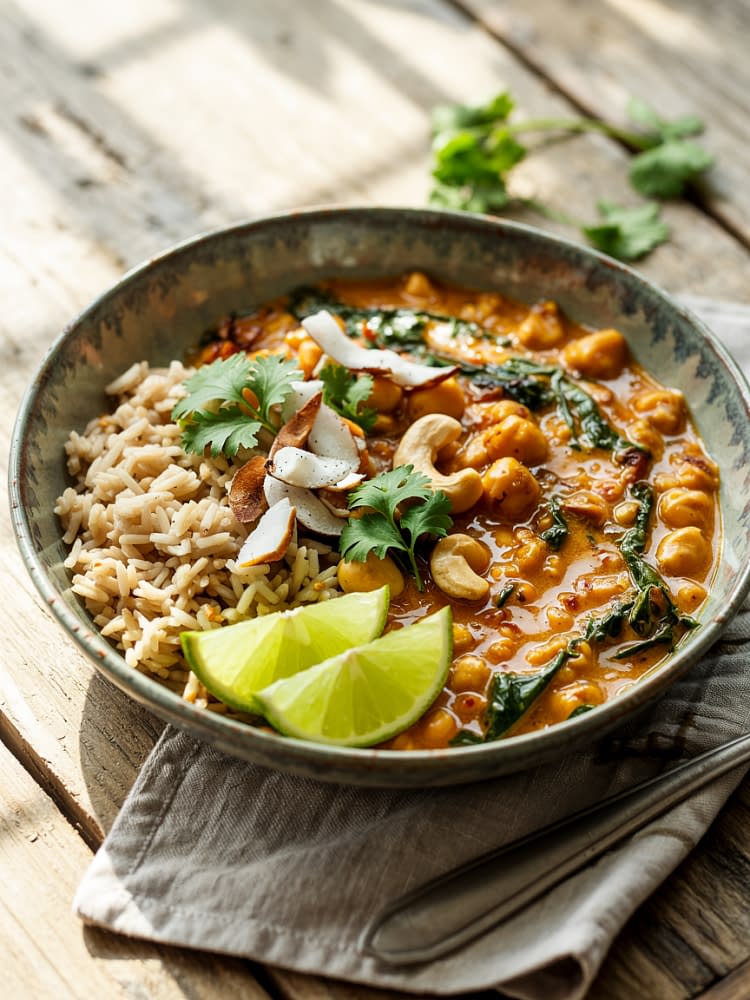

Coconut Curry Chickpeas with Brown Rice is one of those recipes that quietly earns a permanent place in your weekly meal rotation. It is simple but deeply satisfying, nourishing without feeling heavy, and flexible enough to suit busy weeknights, meal prep days, or relaxed weekend cooking. This dish combines creamy coconut curry flavors with tender chickpeas and nutty brown rice, creating a balanced meal that works for vegetarians, vegans, and anyone looking for wholesome comfort food.
What makes Coconut Curry Chickpeas with Brown Rice especially appealing is how accessible it is. The ingredients are pantry-friendly, the cooking process is straightforward, and the flavors feel rich and layered despite the simplicity. It is proof that you do not need complicated techniques or expensive ingredients to create something that feels complete and thoughtfully prepared.
This blog post will walk you through everything you need to know about Coconut Curry Chickpeas with Brown Rice, from ingredient choices and cooking methods to variations, storage tips, and serving ideas. Whether you are new to cooking or someone who enjoys refining familiar recipes, this guide is designed to help you make the best version of this dish every time.
What Makes Coconut Curry Chickpeas with Brown Rice So Special
At its core, Coconut Curry Chickpeas with Brown Rice is a harmony of textures and flavors. The creaminess of coconut milk balances the earthiness of chickpeas, while spices bring warmth without overpowering the dish. Brown rice adds structure and a subtle nuttiness that grounds the curry and makes the meal filling and satisfying.
This recipe also stands out because it adapts easily to different preferences. You can make it mild or spicy, thick or saucy, simple or loaded with vegetables. It works just as well for a quiet family dinner as it does for meal prepping lunches for the week.
Another reason Coconut Curry Chickpeas with Brown Rice is so popular is its nutritional balance. Chickpeas provide plant-based protein and fiber, brown rice offers complex carbohydrates, and coconut milk contributes healthy fats that help keep you full longer. Together, they create a meal that is comforting yet energizing.
Ingredient Breakdown and Why Each One Matters
Chickpeas: The Heart of the Dish
Chickpeas are the main protein source in Coconut Curry Chickpeas with Brown Rice. They have a naturally creamy interior and a slightly nutty flavor that pairs beautifully with coconut milk. When simmered in curry sauce, chickpeas absorb spices while maintaining their shape, giving the dish a satisfying bite.
Canned chickpeas work perfectly here, making this recipe quick and accessible. If you prefer cooking dried chickpeas, they can be used as well, as long as they are fully cooked and tender before adding them to the curry.
Coconut Milk: Creaminess Without Dairy
Coconut milk is what gives this curry its signature richness. Full-fat coconut milk creates a silky, luxurious sauce that coats the chickpeas and vegetables. It also balances the spices and acidity from tomatoes or lime.
Light coconut milk can be used if you want a lighter dish, but the sauce will be thinner. Many cooks prefer full-fat coconut milk for Coconut Curry Chickpeas with Brown Rice because it enhances the comforting quality of the meal.
Brown Rice: A Hearty and Nutritious Base
Brown rice adds substance and texture to this recipe. Its slightly chewy bite contrasts nicely with the creamy curry, and its mild flavor allows the spices to shine. Brown rice is also higher in fiber than white rice, making the meal more filling.
Cooking brown rice separately ensures the best texture. Allowing it to rest after cooking helps the grains firm up and prevents them from becoming mushy when served with curry.
Aromatics: Onion, Garlic, and Ginger
Onion, garlic, and ginger form the flavor foundation of Coconut Curry Chickpeas with Brown Rice. Slowly sautéed onions add sweetness, while garlic and ginger contribute warmth and depth. These aromatics are essential for building a curry that tastes layered and well-rounded rather than flat.
Spices: Building Warmth and Complexity
The spice blend is what transforms simple ingredients into a comforting curry. Curry powder, cumin, coriander, turmeric, and optional chili create warmth without overwhelming the dish. Garam masala added at the end enhances aroma and ties everything together.
Using ground spices keeps this recipe accessible, but the key is to toast them briefly in oil. This step releases their natural oils and deepens the flavor of the curry.
Tomatoes and Lime: Balance and Brightness
Tomatoes add acidity and body to the curry sauce, preventing it from tasting overly rich. Lime juice added at the end brings freshness and lifts the entire dish. This balance is essential in Coconut Curry Chickpeas with Brown Rice, ensuring each bite feels vibrant rather than heavy.
Greens and Garnishes
Spinach or kale adds color, nutrients, and a subtle bitterness that contrasts nicely with the creamy sauce. Fresh cilantro, toasted coconut, or chopped nuts enhance both flavor and presentation, making the dish feel complete.
Ingredient List (Copy-Friendly Format)
For the brown rice
1.5 cup brown rice
3 cup water or vegetable stock
0.5 tsp salt
1 tsp neutral oil
For the coconut curry chickpeas
2 tbsp neutral oil
1 medium onion, finely chopped
3 garlic cloves, minced
1 tbsp fresh ginger, grated
1 green chili, finely chopped (optional)
2 tsp curry powder
1 tsp ground cumin
0.5 tsp ground coriander
0.5 tsp turmeric powder
0.25 tsp red chili powder (optional)
400 g canned chopped tomatoes
800 g canned chickpeas, drained and rinsed
400 ml full-fat coconut milk
1 cup vegetable stock or water
1 tsp salt (adjust to taste)
1 tbsp brown sugar or maple syrup (optional)
1 tsp garam masala
150 g fresh spinach (optional)
2 tbsp lime juice
Fresh cilantro for garnish
Step-by-Step Preparation Guide
Cooking the Brown Rice
Rinse the brown rice thoroughly until the water runs clear. This removes excess starch and improves texture. Combine rice, water or stock, salt, and oil in a saucepan. Bring to a boil, then reduce heat, cover, and simmer until tender. Let the rice rest before fluffing with a fork. This resting time is crucial for perfect grains.
Building the Curry Base
Heat oil in a large pan and sauté chopped onion until soft and translucent. Add garlic, ginger, and chili, stirring until fragrant. This step forms the aromatic backbone of Coconut Curry Chickpeas with Brown Rice.
Blooming the Spices
Add the ground spices directly to the hot oil and aromatics. Stir continuously for about a minute. This technique intensifies the spices and prevents a raw taste.
Simmering the Curry
Add tomatoes and cook until they break down slightly. Stir in chickpeas, coconut milk, and stock. Bring to a gentle simmer and cook until the sauce thickens and the flavors meld.
Finishing Touches
Stir in greens until wilted, then add garam masala and lime juice. Taste and adjust seasoning. Serve hot over brown rice, garnished with fresh herbs.
Tips for the Best Coconut Curry Chickpeas with Brown Rice
Achieving the Perfect Consistency
If you prefer a thicker curry, simmer uncovered for a few extra minutes. For a saucier dish, add more stock. Coconut milk thickens as it cools, so keep that in mind when adjusting consistency.
Balancing Flavors
Taste frequently as you cook. Salt, acidity, and sweetness should be balanced. A small amount of sugar can counteract acidic tomatoes, while lime juice brightens the final dish.
Making It Kid-Friendly
Reduce or omit chili for a milder version. Coconut Curry Chickpeas with Brown Rice can be very family-friendly when kept gently spiced.
Variations to Try
Vegetable-Loaded Version
Add bell peppers, carrots, zucchini, or sweet potatoes to the curry for extra nutrition and texture. Add firmer vegetables earlier and softer ones later.
Protein Boost
For higher protein, add tofu cubes or serve with a side of lentils.
One-Pot Adaptation
While rice and curry are best cooked separately, you can partially cook the rice and finish it in the curry for a softer, stew-like consistency.
Spice Variations
Experiment with smoked paprika for depth or cinnamon for warmth. Small adjustments can make Coconut Curry Chickpeas with Brown Rice feel new each time.
Serving Suggestions
Everyday Meals
Serve Coconut Curry Chickpeas with Brown Rice as a complete meal with a side of cucumber salad or simple yogurt sauce.
For Guests
Garnish generously and serve with warm flatbread or naan-style bread made without haram ingredients.
Meal Prep
Portion into containers with rice and curry stored separately. This keeps textures fresh and makes reheating easier.
Storage and Reheating
Refrigeration
Store leftovers in airtight containers for up to four days. The flavors often deepen overnight.
Freezing
Freeze the curry without rice for best results. Thaw overnight and reheat gently with added liquid.
Reheating Tips
Reheat on the stovetop over low heat. Add water or stock to loosen the sauce and stir gently.
Nutritional Overview
Coconut Curry Chickpeas with Brown Rice provides a balance of carbohydrates, protein, and fats. Chickpeas offer fiber and plant-based protein, brown rice supplies slow-digesting carbohydrates, and coconut milk contributes satisfying fats. This combination helps maintain energy and satiety.
Final Thoughts
Coconut Curry Chickpeas with Brown Rice is a recipe that proves how comforting, nourishing, and versatile plant-based cooking can be. With simple ingredients and thoughtful preparation, it delivers flavor, texture, and balance in every bite. Whether you are cooking for yourself, your family, or guests, this dish offers reliability and warmth that never goes out of style.
Coconut Curry Chickpeas with Brown Rice Recipe
A creamy, fragrant, and budget-friendly vegetarian one-pot curry: tender chickpeas simmered in coconut milk with warming spices and bright lime, served over nutty brown rice. Easy to make, meal-prep friendly, and perfect for weeknight dinners or packing for lunch. (SEO: coconut chickpea curry, easy vegetarian curry, healthy brown rice recipe)
Ingredients
For the Brown Rice
For the Coconut Chickpea Curry (main)
Optional Toppings & Add-ins
Instructions
Cook the brown rice — predictable, fluffy grains
- In a medium saucepan, add the rinsed brown rice, 3 cups water (or stock), 0.5 tsp salt, and 1 tsp oil. Bring to a gentle boil over medium-high heat (pan surface roughly 180 °C). Once boiling, reduce heat to low, cover tightly, and simmer for 35–40 minutes until the water is absorbed and the rice is tender. Turn off heat and let rest, covered, for 5 minutes before fluffing with a fork. If you prefer stove timing variations, check package instructions—brown rice varieties vary.
Prepare aromatics and spices — build the flavor base
- While the rice starts, heat 2 tbsp oil in a large, deep skillet or heavy saucepan over medium heat (~160–170 °C pan surface). Add the chopped onion and sauté for 5–7 minutes until soft and translucent, stirring occasionally. Add the minced garlic, grated ginger, and chopped green chili; cook 30–45 seconds until fragrant.
Bloom the spices — unlock aroma and depth
- Add curry powder, ground cumin, ground coriander, turmeric, and cayenne (if using) to the aromatics. Stir continuously for 30–60 seconds; the spices should smell fragrant but not burn. Toasting the spices in oil releases their essential oils and deepens the curry’s flavor.
Add tomatoes and simmer to form a curry base
- Pour in the canned chopped tomatoes (or fresh tomatoes). Stir and cook for 4–6 minutes until the mixture thickens slightly and the raw tomato smell subsides. If the pan becomes too dry, add a splash of stock.
Add chickpeas, coconut milk, and stock — simmer gently
- Add the drained chickpeas, the full can of coconut milk, and 1 cup vegetable stock. Stir to combine and bring the mixture to a low simmer (aim for ~90–95 °C). Reduce heat to low, cover partially, and simmer gently for 12–15 minutes so the chickpeas absorb the flavors and the sauce slightly reduces. Stir occasionally and taste for seasoning midway.
Finish with greens, seasoning, and brightness
- Stir in the brown sugar or maple syrup if the tomatoes taste too acidic, then season with 1 tsp salt (add more to taste). Fold in the fresh spinach or kale and let it wilt for 1–2 minutes. Remove the pan from heat and stir in the garam masala and lime juice to brighten the curry. Adjust salt, heat, or acidity as needed.
Plate and garnish — compose the dish
- Fluff the rested brown rice and divide between bowls or plates. Spoon a generous portion of the coconut chickpea curry over the rice. Garnish with chopped cilantro, toasted coconut flakes or chopped nuts if using, and an extra lime wedge on the side. Serve with cucumber slices or a dollop of plain yogurt for cooling contrast.
Meal-prep & storage guidance (quick action)
- Allow leftovers to cool to room temperature before transferring to airtight containers. Refrigerate for up to 4 days or freeze for up to 3 months. When reheating, add a splash of water or stock and reheat gently on the stovetop to loosen the sauce; avoid high heat to prevent coconut milk separation.
Note
Vegan & allergy notes: This recipe is vegan as written. For nut allergies, skip toasted nuts as a garnish. Coconut milk is naturally dairy-free.
Canned vs. cooked chickpeas: Canned chickpeas are convenient—use two 400 g cans drained and rinsed. If using dry chickpeas, soak overnight and cook until tender; that’s about 2–3 cups cooked.
Coconut milk choices: Full-fat coconut milk gives the creamiest texture; light coconut milk reduces calories but thins the sauce — add an extra 1⁄4 cup stock if using light.
Consistency control: For a thicker curry, simmer uncovered for a few extra minutes. For a saucier curry, add up to 1⁄2 cup more stock.
Spice control: Reduce or omit cayenne for kid-friendly mild curry; add chopped fresh green chilies or extra cayenne for more heat.
Make it a one-pot meal: Cook rice separately as instructed for best texture. To make a genuine one-pot layered dish, par-cook rice and finish in a large pot with the curry — but results differ from separately cooked rice.
Freezing: Freeze the curry (without rice) in portioned containers for up to 3 months. Thaw in the fridge overnight and reheat on the stovetop. Brown rice freezes well but sometimes becomes chewier; refresh with a sprinkle of water when reheating.