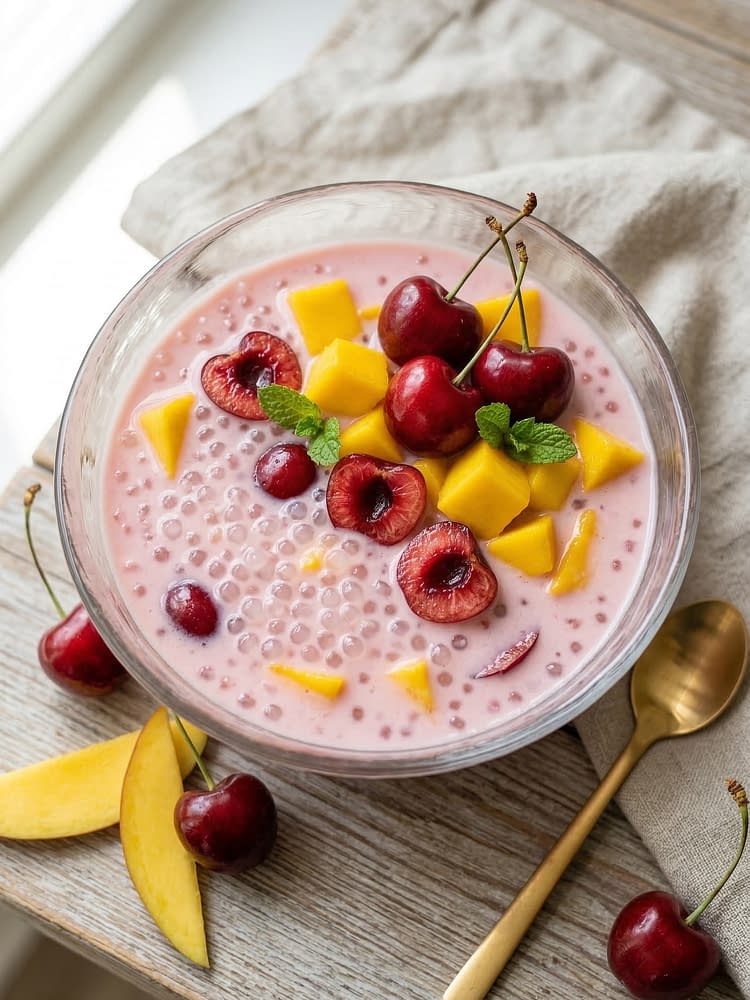

Cherry Mango Sago Recipe (Naturally Pink Creamy Version) is a refreshing and visually stunning dessert that combines creamy coconut milk, juicy cherries, sweet mangoes, and soft chewy sago pearls. The dessert stands out because of its naturally pink creamy base, created by blending fresh cherries with coconut milk and mango. This simple technique produces a beautiful color without artificial ingredients.
Fruit-based sago desserts are very popular across many Asian cuisines because they are light, refreshing, and easy to prepare. Unlike heavy desserts filled with flour or butter, sago desserts rely on natural fruit sweetness and creamy coconut milk to create a smooth, cooling treat.
What makes this Cherry Mango Sago Recipe (Naturally Pink Creamy Version) especially appealing is the balance of flavors. Mango adds tropical sweetness while cherries introduce a mild tartness that brightens the dessert. Combined with the chewy texture of sago pearls, every spoonful feels satisfying yet refreshing.
This dessert is perfect for warm weather, family gatherings, or festive occasions. It also looks beautiful when served in clear glass bowls or dessert cups, making it an excellent choice for entertaining guests.
What Is Sago and Why It Works So Well in Desserts
Before preparing this Cherry Mango Sago Recipe (Naturally Pink Creamy Version), it helps to understand the ingredient that gives the dessert its unique texture.
Understanding Sago Pearls
Sago pearls are small starch balls commonly used in Asian desserts and drinks. When cooked in boiling water, they become translucent and slightly chewy. Their neutral flavor allows them to absorb surrounding flavors, which makes them ideal for fruit desserts.
In chilled desserts like this one, sago pearls act as a texture element rather than a main flavor component. They create a pleasant contrast with the creamy fruit base.
Sago vs Tapioca Pearls
Although they look similar, sago pearls and tapioca pearls are made from different starch sources. Sago pearls are traditionally made from palm starch, while tapioca pearls come from cassava root.
For most desserts, small tapioca pearls can easily replace sago if necessary.
Why Sago Works Perfectly in This Recipe
In Cherry Mango Sago Recipe (Naturally Pink Creamy Version), the pearls absorb the creamy cherry mango mixture while maintaining their delicate chewiness. This creates a dessert that is both smooth and textured at the same time.
The pearls also help distribute the fruit mixture evenly, ensuring every spoonful contains a balanced combination of cream and fruit.
Why You Will Love This Cherry Mango Sago Recipe
This dessert has become a favorite for many home cooks because it offers several advantages.
Naturally Beautiful Color
The naturally pink color comes from blended cherries rather than artificial coloring. This gives the dessert a soft, appealing appearance.
Light Yet Creamy
The coconut milk base makes the dessert creamy without feeling heavy. It remains refreshing even after a large meal.
Easy to Prepare
The recipe requires only a few basic steps, making it accessible for beginner cooks.
Perfect for Summer
Because it is served chilled, the dessert feels cooling and refreshing during warm weather.
Versatile and Customizable
You can easily adjust the fruit, sweetness, or creaminess to match your personal taste.
Ingredients for Cherry Mango Sago Recipe (Naturally Pink Creamy Version)
The ingredients for this dessert are simple and easy to find.
Main Ingredients
Sago pearls form the chewy base of the dessert.
Fresh cherries are blended into the creamy mixture to create the natural pink color.
Ripe mango adds tropical sweetness and a bright yellow contrast.
Coconut milk provides the creamy foundation of the dessert.
Evaporated milk adds richness and smooth texture.
Condensed milk sweetens the dessert and enhances its creaminess.
Optional Ingredients
Several optional additions can enhance the dessert.
Chia seeds can add a small amount of texture and nutrition.
Toasted coconut flakes add a pleasant aroma and slight crunch.
Fresh mint leaves can be used as garnish for a refreshing finish.
Additional fruits such as strawberries or kiwi can also be added.
Choosing the Best Ingredients
The flavor of the dessert depends heavily on the quality of ingredients.
Selecting Mangoes
Choose ripe mangoes that are fragrant and slightly soft to the touch. Sweet varieties work best because they balance the tartness of the cherries.
Selecting Cherries
Fresh cherries should appear firm, glossy, and deep red in color. These cherries will provide both flavor and the natural pink color of the dessert.
Choosing Coconut Milk
Full-fat coconut milk produces the creamiest result. However, light coconut milk can be used if you prefer a lighter dessert.
Kitchen Equipment Needed
Preparing this dessert does not require complicated equipment.
A medium saucepan for boiling the sago pearls.
A blender for creating the creamy fruit mixture.
A fine mesh strainer for draining the pearls.
A mixing bowl for combining ingredients.
A knife and cutting board for preparing fruit.
Serving bowls or glasses for presentation.
Step-by-Step Instructions
Making Cherry Mango Sago Recipe (Naturally Pink Creamy Version) is straightforward when the steps are followed carefully.
Cooking the Sago Pearls
Bring a pot of water to a rolling boil over medium-high heat. Add the sago pearls and stir immediately to prevent them from sticking together.
Allow the pearls to cook while stirring occasionally. After several minutes they will begin turning translucent.
Resting the Sago
Once most pearls appear translucent, turn off the heat and cover the pot with a lid. Let the pearls rest in the hot water for several minutes so the centers finish cooking.
Rinsing the Pearls
Drain the pearls through a fine mesh strainer and rinse them under cold running water. This removes excess starch and prevents clumping.
Preparing the Cherry Mango Cream
In a blender, combine fresh cherries, mango cubes, coconut milk, evaporated milk, condensed milk, and a small pinch of salt.
Blend until completely smooth. The mixture should turn a soft pink color because of the cherries.
Combining the Dessert
Place the cooked sago pearls in a large mixing bowl and pour the cherry mango cream mixture over them.
Stir gently until the pearls are evenly coated.
Adding Fresh Fruit Pieces
Add mango cubes and halved cherries to the mixture. These pieces provide bursts of fresh fruit flavor.
Chilling the Dessert
Cover the bowl and refrigerate the dessert for about one hour. Chilling allows the flavors to blend and the pearls to absorb the creamy mixture.
Serving
Spoon the chilled dessert into bowls or dessert glasses. Garnish with extra mango cubes, cherry slices, or toasted coconut flakes.
Serve immediately while cold.
Tips for the Best Cherry Mango Sago
Do Not Overcook the Sago
Overcooked pearls may become mushy. Stop cooking once they turn translucent.
Rinse the Pearls Thoroughly
Proper rinsing removes extra starch and improves the texture.
Adjust Sweetness Carefully
Because fruit sweetness varies, taste the mixture before chilling and adjust condensed milk if needed.
Serve Well Chilled
This dessert tastes best when fully chilled because the flavors develop during refrigeration.
Variations of Cherry Mango Sago
This recipe can easily be adapted to create new flavors.
Strawberry Cherry Mango Sago
Blend strawberries together with cherries to create an even brighter pink color.
Extra Creamy Version
Use coconut cream instead of coconut milk for a richer dessert.
Dairy-Free Version
Replace evaporated milk with additional coconut milk for a fully dairy-free recipe.
Mixed Fruit Version
Add fruits such as kiwi, dragon fruit, pineapple, or grapes for a colorful fruit mix.
Serving Ideas
Cherry Mango Sago Recipe (Naturally Pink Creamy Version) can be served in several ways depending on the occasion.
Individual glass cups create a beautiful layered presentation.
Small dessert bowls work well for casual family meals.
Large chilled bowls allow guests to serve themselves during gatherings.
Storage and Make-Ahead Tips
This dessert stores well in the refrigerator for up to two days. Keep it in an airtight container to preserve freshness.
Before serving leftovers, stir the mixture gently because the sago pearls may settle at the bottom.
If the dessert becomes too thick, add a small amount of coconut milk to restore the creamy consistency.
Nutritional Benefits of the Ingredients
Although this dessert is indulgent, it also contains nutritious ingredients.
Mangoes are rich in vitamin C and antioxidants.
Cherries contain beneficial plant compounds and natural fiber.
Coconut milk provides healthy fats that add richness and flavor.
Sago pearls provide energy through carbohydrates.
When enjoyed in moderation, this dessert can fit into a balanced diet.
Common Mistakes to Avoid
Using unripe fruit can make the dessert sour instead of sweet.
Skipping the rinsing step may cause the pearls to become sticky.
Serving the dessert without chilling reduces its refreshing flavor.
Adding too much condensed milk can overpower the natural fruit taste.
Conclusion
Cherry Mango Sago Recipe (Naturally Pink Creamy Version) is a simple yet elegant dessert that combines natural fruit flavors with creamy coconut milk and chewy sago pearls. The naturally pink base makes it visually appealing while the balance of sweet mango and slightly tart cherries creates a refreshing taste.
This dessert is easy enough for beginners yet impressive enough for special occasions. Once you try making it at home, it may quickly become one of your favorite chilled fruit desserts to serve during warm weather or family gatherings.
Cherry Mango Sago Recipe
Cherry Mango Sago is a refreshing chilled dessert made with chewy sago pearls, sweet mango cubes, and a naturally pink cherry coconut milk base. In this version, fresh cherries are blended into the creamy mixture, giving the dessert its signature soft pink color while balancing sweetness with a slight fruity tang. It is a beautiful, refreshing dessert perfect for summer gatherings, family treats, or festive occasions.
Ingredients
For Cooking the Sago
For the Pink Cherry Cream Base
For the Fruit Mix
Optional Garnish
Instructions
Cook the Sago Pearls
- Bring 6 cups of water to a rolling boil in a medium pot. Add the sago pearls and stir immediately to prevent sticking.
- Cook the sago for about 10–12 minutes while stirring occasionally. The pearls will gradually turn translucent.
Rest the Sago
- Turn off the heat and cover the pot with a lid. Let the pearls sit in the hot water for about 5 minutes until the centers become fully transparent.
Rinse the Sago
- Drain the cooked sago using a fine mesh strainer and rinse thoroughly with cold water. This removes excess starch and prevents the pearls from sticking together.
- Set the drained sago aside.
Make the Pink Cherry Cream
- Place the fresh cherries and mango cubes in a blender.
- Add coconut milk, evaporated milk, condensed milk, and salt.
- Blend until completely smooth. The mixture should become a naturally soft pink creamy liquid due to the high amount of cherries.
- If you want a stronger pink color, add a few extra cherries and blend again.
Combine Sago and Cream
- Transfer the cooked sago pearls into a large bowl.
- Pour the pink cherry cream mixture over the sago and stir gently until evenly combined.
Add Fruit Pieces
- Fold in mango cubes and halved cherries.
- These fruit pieces give the dessert more texture and color contrast.
Adjust the Texture
- Add ice cubes or a little chilled coconut milk to loosen the mixture and create a refreshing consistency.
- Stir gently until everything is well mixed.
Chill the Dessert
- Cover the bowl and refrigerate for about 1 hour.
- This allows the sago to absorb the creamy fruit mixture and enhances the flavor.
Serve
- Spoon the chilled Cherry Mango Sago into serving bowls or dessert glasses.
- Top with mango cubes, cherry slices, and toasted coconut flakes for a colorful presentation.
- Serve cold.
Note
Use sweet ripe cherries
Sweet cherries will produce a more vibrant pink color and balanced flavor.
Use ripe mango
Ripe mango adds natural sweetness and smooth texture to the dessert.
Adjust sweetness
Taste the mixture before chilling and adjust condensed milk if necessary.
Chill before serving
The dessert becomes thicker and more flavorful after chilling.
Storage
Store in the refrigerator for up to 2 days. Stir before serving if the sago settles.